
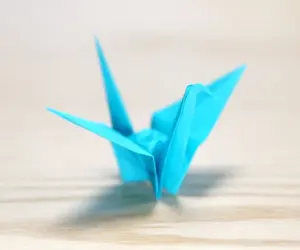

Mod Podge is the better choice when a project needs adhesive, a visible finish, and surface protection, while Elmer’s Glue is usually better for inexpensive bonds between porous materials. For origami and delicate paper, neither product is automatically ideal: use the thinnest possible application, because water can warp folds, darken paper, and weaken finished models.
Key Facts at a Glance
- Mod Podge combines bonding, sealing, and finishing in one water-based craft medium.
- Elmer’s School Glue is primarily a washable adhesive for porous materials such as paper, cardboard, and fabric.
- Elmer’s Glue-All is a different product from School Glue and generally provides a stronger general-purpose bond.
- Standard Mod Podge is water-resistant after curing, not permanently waterproof or food-safe.
- A thin Mod Podge coat typically dries to the touch in 15-30 minutes; complete curing commonly takes about 24 hours.
- Diluted Elmer’s Glue can copy Mod Podge’s flow, but it does not reproduce every formula’s finish, durability, or moisture resistance.
What Is the Difference Between Mod Podge and Elmer’s Glue?
Mod Podge is a branded decoupage medium made to attach a design, seal its surface, and leave a selected finish such as matte, satin, or gloss. Elmer’s Glue is a product family centered on adhesive bonding, and its performance varies substantially between School Glue, Glue-All, CraftBond, and specialty formulas.
The most important distinction is function. Mod Podge is designed for a layered system: a base coat holds the paper, and later coats protect the paper and unify the surface. Elmer’s Glue is normally applied between two materials and is not intended to function as a decorative varnish.
Both products are water-based and commonly contain polyvinyl acetate or related polymer systems. However, the exact resin package, solids content, additives, and intended use depend on the formula. The AI Overview’s claim that every Mod Podge formula chemically cross-links into a non-yellowing film is too broad. Water evaporation and polymer-film formation are central to drying, but additive packages and long-term behavior differ by product.
Master Comparison
| Criterion | Mod Podge Matte | Mod Podge Gloss | Elmer’s School Glue | Elmer’s Glue-All |
|---|---|---|---|---|
| Primary use | Decoupage and sealing | Decoupage and shiny finishing | Washable paper crafts | General bonding |
| Typical finish | Low-sheen, cloudy while wet | Clear, reflective sheen | Clear to translucent | Clear when dry |
| Typical touch-dry time | 15-30 minutes | 15-30 minutes | 20-60 minutes | 30-60 minutes |
| Practical cure | About 24 hours | About 24 hours | About 24 hours | About 24 hours |
| Moisture behavior | Water-resistant after cure | Water-resistant after cure | Softens with water | More durable, not waterproof |
| Common surfaces | Wood, paper, canvas | Wood, paper, glass | Paper, cardboard, fabric | Wood, paper, ceramics |
| Typical 8-ounce cost | $6-$10 | $6-$10 | $2-$4 | $3-$6 |
Prices are typical United States craft-store ranges and change with retailer, package size, and sales. A product marketed as water-resistant should not be treated as waterproof unless the manufacturer specifically assigns that performance to the formula and application.
How Do the Adhesives Dry and Form a Bond?
Mod Podge and Elmer’s Glue dry mainly as water leaves a polymer dispersion, allowing polymer particles to join into a continuous film. The final film’s flexibility, hardness, gloss, and moisture response depend on the formula, coat thickness, substrate, temperature, and humidity.
Elmer’s School Glue is optimized for easy application, cleanup, and bonding of absorbent materials. Paper fibers or cardboard absorb part of the water, while the remaining adhesive film holds the surfaces together. A thick layer dries slowly and can remain vulnerable to moisture for longer.
Mod Podge must perform two jobs that ordinary school glue does not: hold the design in place and form a reasonably uniform surface film above it. Matte, Gloss, and Satin versions use different finish characteristics, while Outdoor, Dishwasher Safe, and Hard Coat formulas target more demanding conditions.
A practitioner should avoid judging either adhesive while it is milky or cloudy. Water-based polymer products often appear white during application and become clearer as the water escapes. Trapped humidity, excessive thickness, cold temperatures, and porous surfaces can delay that change.
Which Mod Podge Formula Fits Your Project?
The correct Mod Podge formula depends on the required sheen, exposure, flexibility, and washing conditions. Matte suits low-reflection paper crafts, Gloss maximizes shine, Satin sits between them, and specialty formulas should be selected only when their stated use matches the project.
| Mod Podge formula | Finish or feature | Suitable project | Important limitation |
|---|---|---|---|
| Matte | Low sheen | Scrapbook boxes, collage, painted wood | Can slightly dull dark colors |
| Gloss | High sheen | Decorative signs, bright decoupage | Shows brush marks and glare |
| Satin | Moderate sheen | Furniture accents and mixed media | Less flat than Matte |
| Dishwasher Safe | Washable decorative surface | Top-rack decorative glass and ceramics | Requires extended curing; not automatically food-safe |
| Outdoor | Greater exterior resistance | Protected signs and garden décor | Needs maintenance and does not make wood rot-proof |
| Fabric | Flexible textile bonding | Fabric-covered wood and canvas | Not a substitute for sewing structural seams |
| Hard Coat | Tougher satin surface | Furniture and high-contact décor | Can feel less flexible on folding paper |
Plaid’s Mod Podge guidance commonly separates drying from curing, an important distinction for users handling decorated objects too soon. A surface may feel dry after one hour while the deeper film still needs additional time to develop its intended hardness.
Which Elmer’s Product Should You Use?
Elmer’s School Glue is the budget choice for washable classroom projects, while Elmer’s Glue-All is a better general-purpose option for wood, dense paper, and some household craft bonds. Neither standard product replaces a dedicated sealer when the project needs a controlled topcoat.
| Elmer’s product | Main strength | Typical materials | Best fit |
|---|---|---|---|
| School Glue | Washability and low cost | Paper, cardboard, lightweight fabric | Children’s crafts and temporary projects |
| Glue-All | Stronger general bonding | Wood, paper, pottery, cardboard | Household craft assembly |
| CraftBond glue stick | Low moisture application | Photos, paper, scrapbooking | Flat paper attachment |
| CraftBond tacky glue | Reduced sliding during assembly | Foam, wood, paper, fabric | Detailed craft placement |
| Wood Glue | Wood-specific joint performance | Bare wood and wood composites | Furniture and woodworking joints |
Elmer’s product categories are not interchangeable. A comparison that calls all Elmer’s Glue “weak” misses the practical difference between washable School Glue and a stronger adhesive intended for heavier craft materials.
For archival photographs, original artwork, or valuable documents, ordinary white glue is a poor default. Acid-free, archival, or conservation-approved products are safer starting points, although even archival adhesives should be tested on a spare piece before use.
Is Mod Podge Better for Origami and Paper Folding?
Mod Podge is useful for stiffening, sealing, or mounting completed origami, but it is usually a poor choice during folding because wet adhesive can deform precise creases. For active origami construction, a dry adhesive such as a glue stick, narrow double-sided tape, or carefully controlled tacky adhesive usually preserves paper geometry better.
Origami has unusual requirements. A sheet may contain dozens of folds, and a small amount of moisture can create cockling that becomes permanent after drying. Thin kami paper, tissue paper, and printer paper are especially vulnerable.
Use Mod Podge only after the model has reached its final shape when a protective or stiffened finish is genuinely needed. Apply a very thin coat with a soft brush, support the model so gravity does not flatten or twist it, and test the same paper first.
For modular origami, adhesive is normally used at connection points rather than across the entire model. Elmer’s Glue-All can work for heavier paper modules, but School Glue may add too much moisture and remain soft at the joint. A precision-tip bottle or a toothpick gives better control than a saturated brush.
Origami Adhesive Choices
| Origami situation | Preferred adhesive | Application amount | Drying concern |
|---|---|---|---|
| Thin kami paper | Dry glue stick | 2-5 mm stripe | Prevents wet cockling |
| Modular paper joins | Tacky glue or Glue-All | Pinhead to rice-grain dot | Avoids squeeze-out |
| Tissue-paper collage | Matte Mod Podge | One ultra-thin coat | Paper may become translucent |
| Finished model stiffening | Matte or Satin Mod Podge | Brush-loaded, not dripping | Support shape during cure |
| Metallic paper | Minimal tacky glue | Tiny contact-point dot | Adhesive can stain reflective film |
| Outdoor paper sculpture | Outdoor Mod Podge | 2-3 thin coats | Indoor curing still required |
A useful practitioner rule is to use no more adhesive than the joint can absorb. Excess glue does not create a proportionally stronger origami connection; it creates a heavier, wetter, slower-drying one.
Which Adhesive Is Stronger and More Durable?
Elmer’s Glue-All often provides the better direct bond for porous materials, while Mod Podge provides the better finished surface for decoupage. “Stronger” has no single meaning here because bond strength, scratch resistance, flexibility, and moisture resistance measure different outcomes.
A wood joint clamped with Glue-All is not comparable to paper attached with a thin Mod Podge coat. Glue-All concentrates its function at the interface between materials. Mod Podge spreads part of its performance across the adhesive layer and the protective film above the artwork.
| Requirement | Better starting choice | Why | Do not assume |
|---|---|---|---|
| Paper-to-cardboard bond | School Glue or Glue-All | Porous fibers accept PVA adhesive | School Glue is not waterproof |
| Paper-to-wood decoupage | Mod Podge | Bonds and seals the design | Matte finish is not scratch-proof |
| Wood-to-wood joint | Wood Glue or Glue-All | Designed for structural bonding | Mod Podge is not a joinery adhesive |
| Decorative glass surface | Mod Podge formula matched to use | Creates a continuous finish | Standard Matte is not dishwasher-safe |
| Flexible fabric decoration | Fabric Mod Podge | Formulated for textile projects | Coating can stiffen soft fabric |
| High-contact furniture décor | Hard Coat Mod Podge | Tougher surface film | It still needs reasonable curing |
| Permanent outdoor exposure | Exterior-rated coating system | Better weather engineering | Outdoor Mod Podge alone cannot prevent all damage |
Mod Podge’s advantage is finish durability, not universal structural strength. Elmer’s advantage is economical bonding, not surface protection.
Can Diluted Elmer’s Glue Replace Mod Podge?
Diluted Elmer’s Glue can substitute for Mod Podge as a low-cost paper adhesive in limited indoor projects, but it cannot reliably reproduce Mod Podge’s finish, hardness, leveling, or formula-specific moisture resistance. A common starting mixture is three parts glue to one part water, followed by testing on scrap material.
The mixture becomes easier to brush and can attach paper to cardboard or wood. It may work for a temporary school display or an uncomplicated collage that will remain indoors and dry.
The substitution becomes risky when the diluted glue is used as a final coating. A thin glue film may remain water-sensitive, attract dirt, feel tacky in humid conditions, or dry unevenly. Adding more water also increases paper swelling and drying time.
Do not mix Mod Podge and Elmer’s in the bottle. The products may have different solids content, preservatives, rheology modifiers, and finish additives. Small test mixtures can be evaluated on scrap, but the result should not be assumed to match either manufacturer’s tested formulation.
How Do You Apply Mod Podge to Paper or Wood?
Apply Mod Podge in thin layers, allow each layer to dry, and protect the finished piece from handling until the film has cured. A typical paper-to-wood decoupage project takes 1-2 hours of active and waiting time, followed by approximately 24 hours of curing.
Step 1: Prepare the Surface
Clean the surface and remove dust, grease, and loose paint. Lightly sand sealed wood with approximately 220-grit abrasive, then wipe away the sanding residue.
The surface should be dry and stable. You will know preparation worked when a clean cloth leaves no visible residue and the paper lies flat during a dry placement test.
A common mistake is applying adhesive over oily furniture polish. The paper may release at the edges because the coating never contacts the substrate properly.
Step 2: Test the Paper and Finish
Brush a small amount of the selected formula onto a hidden section or scrap of the same paper. Check color change, translucency, ink bleed, and surface sheen after at least 30 minutes.
Inkjet prints can smear when water-based medium contacts uncured ink. Seal a print separately with a compatible spray or use a laser print if the design must remain sharp.
Step 3: Apply the Base Coat
Spread a thin, even layer on the wood and the back of the paper. A foam brush, soft synthetic brush, or small silicone spreader helps limit ridges.
Use enough medium to cover the surface without pooling. The correct layer looks continuous but does not form raised beads at the edges.
Step 4: Place and Smooth the Design
Set the paper from one edge toward the other, then smooth outward with a clean brayer or plastic scraper. Work gently because repeated repositioning can stretch wet paper and tear softened fibers.
Wait about 15-30 minutes before adding a topcoat, depending on thickness, humidity, and absorbency. A successful layer feels attached without shifting when the surface is lightly touched near an edge.
Step 5: Add Thin Protective Coats
Brush two or three thin coats over the design, waiting about 15-30 minutes between coats. Alternate brush direction when a uniform appearance matters, but avoid repeatedly brushing a partially dried section.
The surface should become visually consistent after drying. Thick coats cause cloudiness, longer cure times, ridges, and a greater chance of trapped moisture.
Step 6: Cure Before Use
Leave the project undisturbed for at least 24 hours under normal indoor conditions. Dishwasher Safe products commonly require a much longer cure, often up to 28 days according to manufacturer guidance, before top-rack washing.
Cure time is not the same as touch-dry time. A piece that feels dry can still scratch, block, or soften under pressure.
How Much Do They Cost and How Long Do They Take?
Elmer’s School Glue usually costs less per ounce, while Mod Podge costs more because it combines adhesive and finishing functions. For a small 12-by-12-inch paper project, the material-cost difference may be less than $2, but the time saved by using one decoupage medium can be more significant.
| Project type | Product quantity used | Typical material cost | Typical working time | Recommended cure |
|---|---|---|---|---|
| Small origami join | 0.01-0.05 fl oz | Under $0.10 | 2-5 minutes | 30-60 minutes |
| Paper collage, 12 x 12 inches | 0.5-1 fl oz | $0.40-$1.25 | 30-60 minutes | 24 hours |
| Decoupage plaque | 2-4 fl oz | $1.50-$5.00 | 1-2 hours | 24 hours |
| Decorative glass jar | 1-3 fl oz | $0.75-$3.75 | 45-90 minutes | 24 hours |
| Outdoor sign | 3-6 fl oz | $3-$8 | 1.5-3 hours | Product-specific |
| Furniture panel | 6-12 fl oz | $5-$15 | 2-4 hours | 24-72 hours |
These are typical planning ranges, not manufacturer performance guarantees. Temperature below roughly 60°F, high humidity, heavy application, and nonabsorbent glass can extend drying substantially.
What Problems Occur Most Often?
Most adhesive failures come from excess moisture, incompatible surfaces, premature handling, or choosing a formula for the wrong exposure. Thin applications and scrap testing prevent more failures than adding extra adhesive.
| Problem | Likely cause | Immediate response | Prevention |
|---|---|---|---|
| Cloudy dried film | Thick coat or trapped humidity | Allow another 24-48 hours | Apply thinner layers |
| Wrinkled paper | Wet paper expanded | Lift only if still loose; otherwise let dry | Pretest paper and use less medium |
| Bubbling | Air under paper or damp base layer | Pierce tiny bubble and smooth gently | Work from center outward |
| Sticky finish | Humidity or excess product | Move to dry, ventilated room | Reduce coat thickness |
| Ink bleeding | Water-soluble print | Remove and replace, or seal print first | Test ink before application |
| Edge lifting | Dust, grease, or insufficient adhesive | Inject a tiny amount under edge | Clean and press substrate |
| White residue | Adhesive pooled in recesses | Wipe while wet; sand only after cure | Avoid puddles |
| Origami deformation | Saturated paper or unsupported model | Reshape while slightly flexible | Use dry adhesive for construction |
Blow-drying is not a universal fix for cloudy Mod Podge. Low, moving air may help surface water leave, but high heat can curl paper, soften plastic, or create uneven drying. Natural ventilation is safer for delicate work.
Which Adhesive Should You Choose?
Choose Mod Podge for decoupage, layered paper decoration, and projects where the finished surface needs a deliberate sheen or protective film. Choose Elmer’s School Glue for washable classroom crafts, and choose Glue-All for stronger general bonding between porous materials.
For Origami Artists
Use a dry glue stick for thin folded paper and a tiny dot of tacky adhesive for modular connections. Use Mod Podge only after folding when the goal is stiffening or sealing, and test whether the finish changes the paper’s color or flexibility.
For Scrapbooking and Photos
Use an acid-free adhesive designed for photographs or archival paper. Mod Podge can distort thin prints and may complicate future removal, while ordinary Elmer’s products are not automatically archival simply because they dry clear.
For Wood Decoupage
Use Matte, Gloss, or Satin Mod Podge. Apply one base coat and two or three protective coats, then wait at least 24 hours before normal handling.
For Glass and Ceramics
Use Dishwasher Safe Mod Podge only when the object is decorative and the product instructions match the intended cleaning method. Do not treat the coating as a food-contact glaze, and do not assume hand washing and top-rack washing have identical effects.
For Outdoor Projects
Use Outdoor Mod Podge for suitable decorative applications, but keep expectations realistic. Standing water, freezing cycles, intense sunlight, and repeated abrasion can exceed the coating’s design limits.
What Are the Best Alternatives?
A glue stick is often the best alternative for dry origami and flat paper because it introduces far less water than liquid PVA. Tacky glue, bookbinding adhesive, spray adhesive, acrylic sealer, and polyurethane each solve different problems, so the replacement should match the required bond and finish.
| Alternative | Best use | Typical dry time | Main limitation |
|---|---|---|---|
| Acid-free glue stick | Photos and origami paper | 5-15 minutes | Weak on heavy materials |
| Tacky craft glue | Precise craft assembly | 20-60 minutes | Can leave visible ridges |
| Bookbinding PVA | Flexible paper construction | 30-90 minutes | Requires careful clamping |
| Acrylic medium | Art sealing and collage | 15-45 minutes | Finish varies by brand |
| Spray adhesive | Large flat paper surfaces | 5-30 minutes | Overspray and ventilation concerns |
| Water-based polyurethane | Tough wood topcoat | 1-4 hours per coat | Not a substitute for paper glue |
An expert rule of thumb is to separate the bonding decision from the finishing decision. Use the adhesive that best joins the materials, then use a compatible clear coat only when the project actually needs protection.
Frequently Asked Questions
Can You Use Elmer’s Glue on Wood?
Elmer’s Glue-All can bond many porous wood surfaces when the pieces fit closely and remain clamped during drying. Elmer’s School Glue is better reserved for lightweight craft applications. For load-bearing joints, use a wood adhesive selected for the wood species, joint design, and exposure conditions.
Is Mod Podge Waterproof After It Dries?
Standard Mod Podge is generally water-resistant after curing, not waterproof. Dishwasher Safe and Outdoor formulas offer greater resistance under their specified conditions, but neither coating should be treated as an impermeable barrier against immersion, abrasion, heat, or prolonged weather exposure.
Can Mod Podge Be Used on Folded Paper?
Mod Podge can be used on a completed folded-paper model, but applying it before or during folding can distort creases. Brush a test layer on the same paper first, then use one thin coat and support the model while it dries.
Why Does Mod Podge Stay Sticky?
Mod Podge can remain tacky because the coat is too thick, humidity is high, ventilation is poor, or the selected formula is naturally softer. Move the project to a dry room, allow another 24-48 hours, and avoid stacking or wrapping it until the surface hardens.
Does Elmer’s Glue Dry Clear?
Elmer’s School Glue and Glue-All commonly dry clear or translucent, but the appearance depends on coat thickness, substrate, humidity, and pooling. A thick layer can remain cloudy or form a visible film, so test the adhesive on the actual material before committing to the project.
Can You Paint Over Mod Podge and Elmer’s Glue?
You can usually paint over fully cured Mod Podge or Elmer’s Glue with compatible water-based acrylic paint after the surface has dried and lost its tack. Sanding glossy Mod Podge lightly can improve paint adhesion, while oily, dusty, or flexible surfaces still require separate preparation.
The Bottom Line
Mod Podge is the better all-in-one choice for decoupage because it attaches decorative material and creates a controllable finish. Elmer’s Glue is the more economical bonding adhesive, with School Glue suited to washable crafts and Glue-All suited to broader porous-material assembly.
For origami, choose the least wet adhesive that meets the joint’s needs. Use Mod Podge after folding only when you want stiffening or protection, and never assume that a diluted Elmer’s mixture provides the same performance as a purpose-made Mod Podge formula. The right choice in a Mod Podge vs Elmers Glue comparison depends on whether the project needs a bond, a finish, moisture resistance, or all three.
