
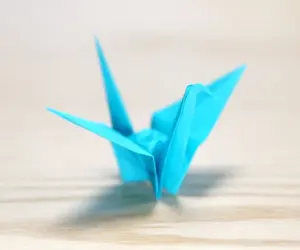


The benefits of origami for your brain come mainly from combining visual-spatial reasoning, sequential planning, fine-motor control, tactile feedback, and sustained attention in one activity. Origami may support spatial skills, hand-eye coordination, working memory, and short-term stress relief, but claims that it physically reshapes the brain or reliably creates new synapses remain unproven for ordinary recreational folding.
Key facts at a glance
Origami converts a two-dimensional sheet into a three-dimensional form through ordered physical actions.
Folding requires visual interpretation, bilateral hand coordination, precision, error detection, and tactile feedback.
Classroom research most consistently supports possible gains in spatial visualization and geometric understanding.
Ten to twenty minutes is a practical beginner session length, not a scientifically established neurological threshold.
Origami can encourage calm concentration, but relaxation does not automatically equal lasting cognitive improvement.
Origami is a supplement to practice and therapy, not a proven treatment for dementia, ADHD, stroke, or anxiety.
What Is Origami, and Why Does It Challenge the Brain?
Origami is paper folding that creates a recognizable or abstract form from a sheet, traditionally without cutting, glue, or drawing. The Japanese terms ori and kami refer to folding and paper, although paper-folding traditions also developed in Europe, China, and elsewhere.
A finished crane, box, frog, or tessellation is the visible result of many smaller decisions. The folder must interpret a diagram, estimate alignment, remember a sequence, control pressure, and update the plan when a crease is inaccurate. That combination makes origami different from passively viewing an image or completing a purely verbal instruction.
Origami also provides immediate physical evidence of errors. A misplaced corner remains visible, and a model that will not collapse correctly identifies a problem in the fold sequence. This feedback loop gives practice a useful structure: predict, act, inspect, and correct.
| Origami demand | Brain-related process | Observable behavior |
|---|---|---|
| Diagram interpretation | Visual attention and spatial transformation | Reading arrows, symbols, and fold lines |
| Ordered instructions | Working memory and executive control | Recalling the next action |
| Two-hand manipulation | Motor planning and coordination | Stabilizing one layer while folding another |
| Shape construction | Spatial visualization | Predicting a three-dimensional result |
| Error correction | Monitoring and flexible problem-solving | Unfolding and repairing a misaligned crease |
How Does Origami Affect Cognitive Processing?
Origami affects cognition through a coordinated task network rather than one isolated “origami center” in the brain. Visual areas interpret the paper and diagrams, frontal systems help organize steps, parietal systems support spatial relationships, motor regions control the hands, and somatosensory regions report pressure and texture.
The popular claim that origami simply activates the left and right hemispheres is too broad. Most demanding manual and visual tasks involve communication across both hemispheres, but ordinary folding does not prove equal activation or a special bilateral effect. Likewise, neuroplasticity is a general property of learning nervous systems, not evidence that origami has been shown to generate new synapses in a particular lobe.
The strongest mechanism is task integration. Origami repeatedly links a mental representation with a physical transformation, then supplies feedback about whether the prediction was correct.
Which Brain Skills Does Origami Practice?
Origami most plausibly practices spatial visualization, sequencing, sustained attention, fine-motor precision, and error monitoring. The size of any improvement depends on model difficulty, practice frequency, prior skill, age, instruction quality, and whether the trained skill transfers to an unrelated task.
Research on origami-based instruction, including classroom work examining spatial skills, suggests that guided folding can help students understand transformations and geometric relationships. Those findings support educational value, but they do not establish broad IQ gains or permanent structural brain changes.
| Cognitive skill | Folding example | Likely transfer | Important limitation |
|---|---|---|---|
| Spatial visualization | Turning a flat base into a 3D model | Mental rotation and geometry practice | Transfer beyond similar spatial tasks varies |
| Working memory | Holding the next 2-4 actions in mind | Following multistep procedures | External diagrams reduce memory demand |
| Fine-motor control | Pinching a narrow reverse fold | Hand precision and dexterity | Joint pain can limit practice |
| Sustained attention | Repeating a tessellation grid | Longer periods of focused work | Frustration can interrupt concentration |
| Cognitive flexibility | Repairing a wrong crease | Switching strategies after an error | Easy models may provide little challenge |
What Are the Main Benefits of Origami for Your Brain?
The main potential benefits are better practice with spatial reasoning, sequencing, hand control, focused attention, and calm engagement. Origami should be described as a structured cognitive activity, not as a clinically validated brain-training intervention.
1. Spatial Reasoning and Mental Rotation
Spatial reasoning is the clearest reason to use origami in education and skill practice. A folder must imagine how a crease changes the orientation, layers, and eventual volume of the paper. Modular construction and tessellations increase the demand because repeated units must fit into a larger geometric system.
A 2015 study on origami-based instruction and elementary students’ spatial skills reported improvements associated with the instructional intervention, although classroom studies can be affected by teaching quality, comparison-group design, and familiarity with the test. Origami is therefore a credible spatial-learning tool, but not a guaranteed general-purpose intelligence enhancer.
2. Sequencing and Working Memory
A traditional model may require dozens of ordered operations. Remembering whether the next action is a valley fold, squash fold, or reverse fold exercises procedural sequencing, especially when the learner looks away from the instructions.
The memory demand can be adjusted. Beginners can use a printed diagram at every step, while experienced folders can study a sequence, close the guide, and reconstruct it. That makes origami useful for graded practice, but it also means a claimed “memory benefit” may reflect instruction design rather than folding alone.
3. Fine-Motor Coordination
Origami gives both hands different jobs. One hand may anchor a corner while the other sets a crease, and fingertips must regulate pressure according to paper thickness and layer count. This trains coordination and force control in a concrete way.
Origami is not automatically suitable for every hand condition. Small paper and dense layers can aggravate thumb osteoarthritis, tremor, or reduced sensation. Larger paper, fewer layers, and a blunt paper folder can preserve the cognitive task while reducing pinch force.
4. Attention and Error Monitoring
Folding rewards sustained visual attention because small alignment errors compound. A one-millimeter offset early in a model can prevent a later flap from meeting its target, forcing the folder to inspect prior steps rather than continue mechanically.
That consequence makes origami a useful attention exercise. It does not prove that origami improves attention in all settings, and a difficult model may produce frustration instead of concentration. The best challenge is slightly above current ability.
5. Calm Focus and Short-Term Stress Relief
Rhythmic folding can create a quiet period with a clear external focus. The hands receive predictable tactile feedback, and the mind has fewer competing decisions when a familiar base is repeated. This may reduce perceived stress during or immediately after a session.
Evidence for long-term cortisol reduction or a universal flow response is limited. A 10-minute session may feel calming for one person and irritating for another, particularly when instructions are unclear. Treat stress relief as a plausible short-term outcome to test personally, not as a guaranteed hormonal effect.
6. Creative Problem-Solving
Origami encourages constrained creativity. The paper, fold sequence, and structural limits narrow the available actions, while the folder still chooses color, scale, model, and variations. Designing original forms requires abstraction, iteration, and acceptance of failed prototypes.
The creative benefit is strongest when the learner moves beyond copying. A useful progression is to fold a standard model, change one feature, and then explain which structural folds made the change possible.
Which Origami Types Train Different Skills?
Origami type changes the cognitive load more than the label alone suggests. Traditional models emphasize sequence and form, modular origami emphasizes repetition and assembly, and tessellations emphasize geometry and pattern maintenance.
Wet-folding is not automatically better for the brain. Damp paper changes the physical technique and may increase shaping demands, but it also creates extra handling and drying requirements.
| Origami type | Typical task | Strongest demand | Suitable starting level |
|---|---|---|---|
| Traditional single-sheet | Crane, boat, animal | Sequencing and form recognition | Beginner to advanced |
| Modular or kusudama | 6-30 repeated units | Working memory and assembly geometry | Beginner to intermediate |
| Tessellation | Repeated pleats or grids | Pattern control and spatial persistence | Intermediate to advanced |
| Action origami | Jumping frog, flapping bird | Cause and effect, motor feedback | Beginner and children |
| Wet-folding | Curved animals and masks | Pressure control and shaping | Intermediate to advanced |
Which Models Fit Specific Goals?
Choose a model by the skill you want to practice, not by visual complexity alone. A simple action model may provide stronger feedback for a child than an advanced animal that requires an hour of unsupported frustration.
| Goal | Recommended model category | Typical session | Success measure |
|---|---|---|---|
| Spatial visualization | Modular cube or simple polyhedron | 20-40 minutes | Unit alignment and final symmetry |
| Sequencing | Crane or flower with 15-30 steps | 10-25 minutes | Fewer prompts per repetition |
| Fine-motor practice | Large simple animal | 10-20 minutes | Controlled creases without tearing |
| Focus reset | Repeated geometric pattern | 10-15 minutes | Continuous attention without switching tasks |
| Creative design | Modified box or mask | 30-60 minutes | One intentional structural variation |
How Should a Beginner Use Origami for Cognitive Practice?
A beginner should fold for 10-20 minutes, three to five times per week, using paper around 15-20 centimeters square and a model that can be completed in 10-25 minutes. The factor most likely to determine success is an appropriate difficulty level, because repeated successful correction builds skill more reliably than starting with a highly complex model.
Use a quiet surface, good lighting, and one clear diagram or video. Keep the first session short enough to finish before hand fatigue or frustration changes the task into random folding.
Step 1: Choose the Cognitive Target
Select one target before choosing the model. Spatial visualization calls for modular forms, sequencing suits a traditional model, and calm focus usually works best with repetitive folds that do not require constant troubleshooting.
Write the target in one sentence, such as “I will complete the model with no more than four prompts.” A defined target makes progress easier to observe than a general goal of “improving the brain.”
Step 2: Prepare the Paper and Workspace
Use one square sheet measuring 15-20 centimeters, a flat table, and a visual guide with pause controls. Standard kami paper is inexpensive and easy to crease; copy paper works for practice but may be less forgiving because it is often thicker and less flexible.
Place the paper in the same orientation as the guide. Marking the top corner with your eyes, rather than a pen, can prevent accidental orientation errors while preserving the traditional no-marking process.
Step 3: Decode the Next Fold
Read one diagram before moving the paper. Identify the starting edges, arrow direction, mountain or valley crease, and the number of layers involved.
The checkpoint is simple: you should be able to describe where the paper will move before folding it. A common mistake is copying hand movements without understanding the target relationship.
Step 4: Anchor the Center and Crease Outward
Match the relevant edges or corners, place one fingertip at the alignment point, and slide outward toward the ends. Press firmly enough to create a visible crease without crushing several layers at once.
The fold worked when the intended points meet and the crease remains visible after release. Folding from one corner across the sheet often creates a skewed model that becomes difficult to repair later.
Step 5: Pause at Every Structural Change
Stop after bases, sinks, squash folds, and major rotations. Compare the model with the guide before continuing, because later steps rarely repair a structural mistake made earlier.
The checkpoint is a model that opens and collapses along the expected creases. Rushing an inner fold is a common failure; open the layers slightly, locate the pre-crease, and collapse along that line instead of forcing the paper.
Step 6: Record the Result
Write down the session length, model, number of prompts, and one error. Repeat the same model once or twice before increasing difficulty.
A useful improvement is fewer prompts, cleaner alignment, or less time spent recovering from mistakes. Completion speed alone is a weak measure because rushing can reduce accuracy.
How Much Time and Money Does Origami Require?
Basic origami typically costs $0-$15 to begin and takes 5-30 minutes per beginner model. Specialty paper and advanced models can increase the cost and time substantially, but expensive materials are unnecessary for cognitive practice.
Typical prices vary by country and retailer. Free diagrams from organizations such as OrigamiUSA and public video tutorials can reduce the instructional cost, while specialty washi, double tissue, or large-format paper is more relevant to advanced shaping than to basic brain practice.
| Item or activity | Typical quantity | Typical cost | Typical duration |
|---|---|---|---|
| Standard kami paper | 100-200 sheets | $5-$15 | 5-20 minutes per model |
| Copy paper practice | 20-50 sheets | $0-$5 | 5-25 minutes per model |
| Specialty paper | 10-30 sheets | $10-$35 | 20-120 minutes per model |
| Beginner instruction | 1 guide or video | $0-$20 | 15-60 minutes per lesson |
| Modular project | 6-30 units | $3-$20 | 30-180 minutes total |
Is Origami Better Than Puzzles, Chess, or Video Games?
Origami is the better choice when the goal combines spatial reasoning, hand coordination, and a low-screen activity. Chess offers deeper strategic planning, Sudoku emphasizes symbolic pattern solving, and selected video games may train rapid visual attention, so no activity is universally superior.
The most defensible comparison concerns trained skills. Evidence that practice transfers broadly from any one activity to general intelligence is limited, and enjoyment and adherence often determine whether an activity produces more total practice.
| Activity | Main trained demand | Physical component | Typical session |
|---|---|---|---|
| Origami | Spatial construction and sequencing | Fine-motor, tactile | 10-30 minutes |
| Chess | Planning and rule-based strategy | Low hand demand | 20-90 minutes |
| Sudoku | Symbolic logic and pattern search | Minimal motor demand | 10-30 minutes |
| Jigsaw puzzle | Visual matching and persistence | Manual placement | 30-180 minutes |
| Action video game | Rapid tracking and response | Controller coordination | 20-60 minutes |
When Should You Choose Origami?
Choose origami when you want a portable, inexpensive activity that produces a physical result and allows difficulty to increase gradually. Choose chess for competitive planning, Sudoku for short symbolic exercises, and a jigsaw puzzle for shared visual problem-solving.
Origami may be especially practical in classrooms, libraries, care settings, and workplaces because it needs little equipment and creates a natural stopping point. It is less practical for people with severe hand pain, poor vision, or difficulty interpreting diagrams unless the activity is adapted.
Can Origami Help Children, Older Adults, or People in Rehabilitation?
Origami can support guided practice in children and older adults, but evidence and safety requirements differ by group. For children, the strongest educational rationale involves geometry, sequencing, and coordination; for older adults, the activity can provide engagement and dexterity practice without proving that it prevents cognitive decline.
Rehabilitation must remain clinician-led. A therapist may adapt paper size, resistance, repetition, and positioning after stroke or hand injury, but recreational origami cannot replace occupational therapy, speech therapy, prescribed exercise, or medical assessment.
| User situation | Appropriate adaptation | Avoid or monitor | Practical starting point |
|---|---|---|---|
| Child age 5-8 | Bright 15-20 cm paper, action models | Tiny paper and long sequences | 5-10 minutes |
| Student age 9-18 | Diagram-based animals and cubes | Unsupervised frustration | 15-25 minutes |
| Older adult | 20-25 cm paper, high-contrast guides | Pain, tremor, visual strain | 10-15 minutes |
| Arthritis or stiffness | Fewer layers, bone folder, breaks | Repeated forceful pinching | 5-minute blocks |
| Post-stroke rehabilitation | Therapist-selected bilateral tasks | Unsupervised complex models | Clinician-defined |
For autism, ADHD, anxiety, or dementia, individual responses vary widely. Some people benefit from predictable sensory input and visible completion, while others find precision demands overstimulating. Trial a short, choice-based session and stop if pain, distress, or fatigue increases.
What Does Origami Not Do?
Origami does not reliably enlarge memory, prevent dementia, create a flow state, or produce measurable neuroplastic changes after a fixed four-to-six-week schedule. The AI Overview’s precise claims about synaptogenesis, cortisol reduction, dopamine release, hippocampal conversion, and universal dual-hemisphere activation exceed the evidence available for ordinary origami practice.
Origami also cannot isolate one brain function. A person may improve at folding cranes because they learned the sequence, without improving unrelated memory tasks. That is a transfer problem shared by many brain-training activities.
An honest practitioner rule is to separate three outcomes:
- Performance: completing a model more accurately.
- Near transfer: improving a similar spatial or sequencing task.
- Far transfer: improving unrelated memory, reasoning, or daily functioning.
Origami has a reasonable case for performance and possible near transfer. Far transfer requires stronger controlled evidence.
Why Do Origami Folds Go Wrong?
Origami failures usually begin with orientation, alignment, crease quality, or layer control rather than lack of intelligence. Correcting the earliest visible error is more effective than forcing the final shape.
| Failure mode | Likely cause | Recovery method | Prevention |
|---|---|---|---|
| Corners no longer meet | Initial fold was skewed | Unfold to the last correct step | Anchor the center first |
| Layers slide | Crease is too light | Re-crease on a flat surface | Press from center to edge |
| Paper tears | Excess force or too many layers | Replace sheet or simplify model | Use larger, thinner paper |
| Sink fold collapses badly | Interior pre-creases are unclear | Open layers and trace the crease path | Pause before collapsing |
| Model looks asymmetrical | Rotated or reversed orientation | Compare top, bottom, and color sides | Mark orientation mentally |
| Hands become painful | Paper is too small or stiff | Stop, stretch, and change materials | Use 20-25 cm paper |
Expert insight: precision is not the same as pressure. A sharp crease made along the correct line matters more than pressing harder, particularly when several layers are stacked.
Expert insight: repeating one model can produce more useful learning than collecting ten unrelated models. Repetition reduces instruction load and exposes whether improvement comes from spatial understanding, memory, or simple familiarity.
Expert insight: the best difficulty level usually permits completion with occasional correction. A model that fails at step 8 every time provides less sustained practice than a model completed with two recoverable errors.
How Can You Measure Whether Origami Helps You?
Measure the activity against a defined baseline for two to four weeks rather than assuming a benefit. Record model type, session length, prompts, error count, perceived stress before and after, and whether hand discomfort occurred.
Use a simple scale from 0 to 10 for stress and concentration. If you want a cognitive measure, repeat a comparable spatial task at the same time of day, but avoid treating a single score as proof of brain change.
| Measure | Baseline method | Recheck interval | Meaningful personal signal |
|---|---|---|---|
| Folding accuracy | Count alignment errors in one model | Weekly | Fewer major corrections |
| Instruction dependence | Count pauses or prompts | Every 2-3 sessions | Less external help |
| Focus | Rate concentration from 0-10 | Each session | Higher ratings without fatigue |
| Stress | Rate before and after from 0-10 | Each session | Repeated short-term reduction |
| Dexterity comfort | Rate hand discomfort from 0-10 | Each session | Stable or lower discomfort |
Do not use improved folding speed as evidence of better general cognition. Skill-specific practice naturally improves skill-specific performance.
FAQ
Does origami improve memory?
Origami can practice procedural sequencing and working memory because folders must retain ordered actions, fold types, and orientation. Evidence does not show that recreational origami reliably improves every form of memory. Test improvement with a similar sequence task, and separate better recall of a familiar model from broader memory transfer.
Is origami good for ADHD?
Origami may help some people with ADHD sustain attention through short, tactile, goal-directed tasks. It is not an ADHD treatment and can become frustrating when instructions are visually dense. Use action models, video pauses, 5-10 minute blocks, and clear completion points, while continuing clinically recommended care.
Can origami reduce anxiety?
Origami can reduce perceived anxiety temporarily by focusing attention on predictable hand movements and a concrete goal. The response is individual, and complex models may increase anxiety. Choose repetitive beginner folds, stop before fatigue, and seek professional care for persistent or severe anxiety.
What paper is best for beginners?
Kami paper around 15-20 centimeters square is the most practical beginner option because it folds cleanly, comes in inexpensive packs, and has useful color contrast. Copy paper can work for large simple models, while very thick, glossy, or textured paper makes accurate beginner creases harder.
How often should I do origami?
Three to five sessions per week, lasting 10-20 minutes, is a practical schedule for building folding skill and testing attention or relaxation effects. No universal schedule has been proven to produce neuroplasticity. Consistent, manageable practice is more useful than occasional sessions lasting several hours.
Is origami useful for dementia or stroke recovery?
Origami may provide supervised engagement, bilateral hand use, sequencing practice, and a meaningful finished object. It has not been established as a treatment for dementia or stroke recovery. A healthcare professional should choose adaptations, particularly when vision, sensation, movement, swallowing, or cognition is impaired.
The Bottom Line
The benefits of origami for your brain are best understood as repeated practice in spatial construction, sequencing, fine-motor control, attention, and error correction. Origami is inexpensive, adaptable, and capable of producing short-term calm focus, but current evidence does not justify claims that it uniquely reshapes the brain or prevents cognitive disease. Start with 10-20 minutes, select a model matched to one goal, track observable changes, and treat origami as a useful activity rather than a medical cure.
