

Origami artists fold, crease, compress, stretch, shape, and sometimes dampen paper to transform a flat sheet into a three-dimensional form. Traditional origami relies primarily on folding without cutting or gluing, while advanced artists use crease patterns, wet-folding, tessellations, or interlocking modules to control structure, texture, and curvature.
Key Facts at a Glance
- Origami changes paper geometry by converting flat surfaces into angled facets, layers, hinges, and curved shells.
- A permanent crease forms when paper fibers pass beyond elastic recovery and undergo plastic deformation.
- Valley folds point inward toward a trough; mountain folds project outward like a ridge.
- Wet-folding uses controlled moisture to create rounded forms in thicker, sized papers.
- Complex single-sheet models can require several hours, hundreds of folds, and paper prepared for high stress.
- Origami artists do not make every model stronger: dense folds can also concentrate stress and cause tearing.
What Do Origami Artists Actually Do to Paper?
Origami artists manipulate paper through controlled folding, unfolding, flattening, collapsing, pleating, twisting, and sculptural shaping. The artist does not merely bend a sheet once; the artist builds a planned network of creases that changes where the sheet can move and how its surfaces support one another.
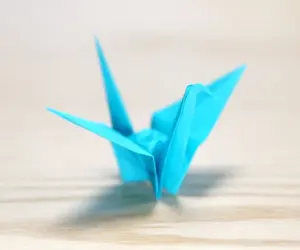
A simple crane may use a few foundational folds, whereas a realistic insect can contain hundreds of engineered creases. Some folds divide the sheet into facets, others create hidden layers, and narrow pleats convert a broad region of paper into legs, antennae, scales, or feathers.
Traditional origami generally excludes cutting, tearing, and adhesive. Kirigami permits cutting, and some contemporary sculptors use glue, wire, paint, or coatings after folding, so the exact boundary depends on the artist’s stated method.
How Does Folding Change Paper?
Folding changes paper by creating hinges and surfaces that redirect force. A flat sheet bends easily because little material resists movement out of its plane; a folded sheet gains depth, and depth allows the new facets to carry loads through different directions.
The inside of a sharp crease experiences compression while the outside experiences tension. Cellulose fibers buckle, shift, and partly break their original alignment. After the fold passes the paper’s elastic limit, the sheet retains a crease rather than returning completely flat.
The crease itself is not always the strongest part. A fold can stiffen a broad panel, but a narrow junction with many layers can become the weakest point because force accumulates in a small area.
How Does Origami Paper Fold and Hold Its Shape?
Origami paper holds a shape through plastic deformation, friction between layers, geometric interlocking, and sometimes moisture-assisted shaping or surface treatment. The final sculpture stays formed because its crease network restricts movement and distributes stress across folded facets.
Paper consists mainly of interwoven cellulose fibers, with additives such as sizing, fillers, dyes, and coatings varying by product. Fiber direction affects tear resistance and bending behavior, so an artist may rotate a sheet before folding when a model places stress along a particular axis.
A crisp dry fold produces a relatively sharp hinge. A damp fold allows fibers to move while the paper is shaped, which makes broad curves possible but reduces handling tolerance until the model dries.
What Is a Valley Fold?
A valley fold places the crease at the bottom of a V-shaped angle when viewed from the intended side. In diagrams, a valley fold commonly appears as a dashed line, although notation varies by designer and publication.
What Is a Mountain Fold?
A mountain fold makes the crease rise like a ridge or inverted V. A mountain fold often reverses the direction of a valley fold, but the two are not interchangeable when a crease pattern controls the model’s inside and outside surfaces.
Why Do Creases Become Permanent?
Creases become permanent when bending produces plastic deformation in the paper sheet. Elastic bending disappears after release, but plastic deformation changes fiber alignment and the local thickness profile, leaving a visible memory line.
Paper memory is useful because the artist can unfold a sheet and retain a geometric roadmap. It also limits correction: a misplaced crease leaves a weak line, often called ghosting, that can remain visible in the finished model.
How Do Artists Turn a Square Sheet Into a Model?
Artists usually move through paper selection, preparation, reference creasing, a base collapse, detailed shaping, and finishing. A simple model may take 2-15 minutes, while a complex single-sheet sculpture commonly takes 5-40 or more hours, depending on design density and paper preparation.
| Process stage | Typical action | Typical time | Success checkpoint |
|---|---|---|---|
| Select paper | Match size, thickness, grain, and strength to the model | 5-20 minutes | Paper bends without cracking |
| Square the sheet | Trim or verify equal diagonals and sides | 2-10 minutes | Corners and diagonals align |
| Pre-crease | Establish reference lines, grids, or major divisions | 5-90 minutes | Creases meet intended points |
| Collapse the base | Bring several creases together into layers | 5-120 minutes | Base closes without forced tension |
| Shape details | Form limbs, faces, pleats, curves, and flaps | 10 minutes-30 hours | Features hold without tearing |
| Finish and dry | Refine curves, apply moisture or MC when appropriate | 15 minutes-24 hours | Form remains stable after release |
What Is Squaring?
Squaring means preparing a sheet with four equal sides and four right angles. Commercial origami paper is usually square already, but handmade paper, tissue foil, wrapping paper, and trimmed watercolor paper may require measurement and cutting.
Complex models magnify early errors. A one-millimeter discrepancy at the edge can shift several reference points later, although the exact tolerance depends on sheet size, model design, and the number of subsequent folds.
What Is Pre-Creasing?
Pre-creasing means folding and unfolding reference lines before the artist collapses or shapes the model. These lines can form simple divisions, a traditional base, a repeated grid, or a full crease pattern.
Pre-creasing does not mean pressing every line as hard as possible. Experienced folders often establish uncertain lines lightly, confirm alignment, then sharpen the crease after the geometry is correct.
What Happens During a Collapse?
A collapse brings multiple pre-creased regions together at the same time. The flat sheet becomes a compact, layered base whose flaps can later be allocated to the model’s body parts.
The collapse is a geometric event rather than a brute-force squeeze. If layers buckle unpredictably, the usual causes are an incorrect mountain or valley direction, a missing crease, excessive paper thickness, or an inaccurate reference point.
Which Folding Techniques Do Origami Artists Use?
Origami artists choose techniques according to the target form. Dry folding favors precise facets, wet-folding favors rounded volume, crease-pattern folding favors complexity, tessellation favors repeated surfaces, and modular origami favors structures assembled from separate units.
| Technique | Sheets used | Surface result | Typical application |
|---|---|---|---|
| Dry folding | 1 or more | Sharp creases and angular facets | Cranes, boxes, geometric animals |
| Wet-folding | Usually 1 | Rounded curves and compressed volume | Mammals, faces, botanical forms |
| Crease-pattern folding | Usually 1 | Dense engineered detail | Insects, dragons, complex figures |
| Tessellation | Usually 1 | Repeating flat or relief texture | Lampshades, panels, architectural surfaces |
| Modular origami | 2-1,000+ | Interlocked polyhedra and sculptures | Balls, stars, large installations |
What Is Wet-Folding?
Wet-folding is a method associated with Akira Yoshizawa in which an artist slightly dampens suitable paper before shaping it. Moisture temporarily softens the sheet, allowing broad curves and rounded transitions that are difficult to make with a dry, sharply creased sheet.
Wet-folding works best with thicker, sized papers, including some watercolor papers and handmade sheets. Too much water weakens the sheet, makes layers slide, and increases the chance of tearing. The model must dry in its intended position because the shape can change as moisture leaves the fibers.
Methyl cellulose, commonly abbreviated MC, may be brushed or mixed into paper preparation to improve handling and help a finished form retain shape. MC is not a universal hardener, and excessive coating can make folding gummy, brittle, or difficult to reverse.
What Is a Crease Pattern?
A crease pattern is a map showing the major and minor creases required to construct a model. Instead of following one diagrammed action at a time, the folder interprets the entire geometric plan and collapses the sheet according to mountain and valley assignments.
Designers use tools such as TreeMaker and other crease-pattern software to plan circle packing, branch allocation, flap placement, and layer structure. A pattern for a many-legged insect may use a dense grid because each appendage needs a narrow region of paper.
What Is Tessellation?
Origami tessellation repeats a geometric unit across a sheet to create a continuous pattern. The design commonly uses pleats, twists, or waterbomb-derived cells, and adjacent units share boundaries rather than existing as separate glued pieces.
Tessellations are useful when the visual goal is texture rather than a recognizable animal or figure. Artists may use them for screens, lampshades, relief panels, jewelry, and architectural prototypes.
What Is Modular Origami?
Modular origami uses multiple folded units that connect through slots, pockets, or friction. A modular sculpture can contain dozens or hundreds of identical pieces, although some contemporary structures use varied units.
The method changes the artist’s main problem from single-sheet allocation to repeatability and connection strength. A module that is slightly too loose may destabilize an entire ball, while a module that is too tight can crease or split during assembly.
Which Paper Should an Origami Artist Choose?
The appropriate paper depends on model complexity, fold density, desired surface, and whether the artist needs sharp geometry or sculptural curves. Kami is inexpensive and forgiving for practice, while handmade washi, tissue foil, Tant, and specialty papers support different combinations of strength, thinness, color, and memory.
| Paper type | Typical thickness or weight | Best use | Main limitation |
|---|---|---|---|
| Kami | Approximately 60-80 gsm | Beginner models and repeated practice | Weak for dense multi-layer collapses |
| Tant | Approximately 70-80 gsm | Geometric models and colored display pieces | Can resist very tight layers |
| Watercolor paper | Approximately 100-300 gsm | Wet-folded animals and figures | Thick edges limit small details |
| Tissue foil | Often 20-40 gsm finished | Complex insects and high layer counts | Preparation takes time |
| Washi | Approximately 40-120 gsm, variable | Strong, textured artistic models | Quality and behavior vary by sheet |
| Unryu or long-fiber paper | Approximately 30-90 gsm, variable | Stressful models and reinforcement | Visible fibers can interrupt fine detail |
Paper weight alone does not predict performance. Fiber length, sizing, coating, grain direction, surface friction, and moisture response can matter more than gsm when a model contains many layers at one point.
Is Standard Printer Paper Suitable?
Standard printer paper can make simple practice models, but it is usually a poor choice for complex origami. Common printer sheets are often 75-90 gsm, and their short fibers, coatings, or weak grain response can cause cracking when compressed into small layers.
Printer paper remains useful for testing a new crease pattern. It is inexpensive, large enough for rough prototypes, and easy to replace before the artist commits specialty paper.
How Do Folding Methods Compare?
Dry-folding is the most accessible starting point, wet-folding is the better choice for organic volume, crease-pattern collapse is the better choice for extreme detail, and modular origami is the better choice for repeated large structures. No method is universally superior.
| Decision factor | Dry-folding | Wet-folding | Crease-pattern folding | Modular origami |
|---|---|---|---|---|
| Typical paper | Kami, Tant, copy paper | Sized watercolor or handmade paper | Thin tissue foil, washi | Kami, Tant, cardstock |
| Beginner access | High | Medium | Low | Medium |
| Typical project time | 2 minutes-4 hours | 30 minutes-12 hours | 5-40+ hours | 30 minutes-20 hours |
| Main visual effect | Crisp facets | Rounded volume | Fine anatomical detail | Repeated geometry |
| Adhesive requirement | None traditionally | None traditionally | None traditionally | None for friction-fit designs |
| Main failure | Misalignment | Over-wetting | Collapse confusion | Loose connections |
A practical rule is to prototype a complex design dry before wet-folding it. Wet paper can conceal whether the geometry is correct because soft layers shift and curved surfaces mask alignment errors.
What Does Origami Cost and How Long Does It Take?
A simple origami project may use a $0.05 sheet and take 2-15 minutes, while a master-level sculpture may use a $10-$50 handmade sheet and require 5-40 or more hours. Commission prices vary widely by artist, subject, scale, licensing, framing, and whether the work is a one-off design.
| Skill level | Typical fold count | Typical sheet cost | Typical completion time | Typical commission range |
|---|---|---|---|---|
| Beginner | 5-30 folds | $0.05-$0.50 | 2-15 minutes | $5-$25 |
| Intermediate | 30-100 folds | $0.50-$3 | 30 minutes-2 hours | $25-$150 |
| Advanced | 100-500 folds | $3-$20 | 2-10 hours | $150-$1,500 |
| Master complexity | 500-1,000+ folds | $10-$50+ | 5-40+ hours | $500-$5,000+ |
These are typical working ranges, not universal price standards. A commercially printed sheet can cost less than a dollar, while a large handmade sheet prepared with MC, foil, or custom sizing can cost substantially more.
The hidden cost is design time. An artist may spend weeks developing a crease pattern before folding the final model, so the visible folding session represents only part of the labor.
Why Do Origami Models Tear or Lose Their Shape?
Origami models fail when alignment errors, layer thickness, fiber damage, moisture, or concentrated stress exceed the paper’s tolerance. The most common problems are ghosting, torn junctions, creep, weak edges, and distortion during drying.
| Failure mode | Common cause | Visible symptom | Practical response |
|---|---|---|---|
| Ghost crease | Wrong line folded too sharply | Extra scar near intended crease | Reposition early; avoid repeated correction |
| Junction tear | Too many layers at one point | Split fibers or small hole | Use thinner paper or enlarge the model |
| Creep | Small errors accumulate | Final flaps miss target points | Recheck every reference fold |
| Layer slippage | Damp or coated paper moves | Curves shift during shaping | Reduce moisture and support the form |
| Edge cracking | Paper too dry or brittle | White stress marks at edges | Change paper or soften the fold |
| Spring-back | Creases are shallow or paper is stiff | Model gradually opens | Sharpen selected creases or use support |
Can a Torn Model Be Repaired?
A small tear can sometimes be stabilized from the inside with a narrow strip of compatible paper or a controlled adhesive, but the repair may violate traditional single-sheet rules and remain visible. A major tear at a load-bearing junction is usually better solved by refolding the model with larger paper or a thinner material.
Do not flood a finished model with glue. Liquid adhesive can stain fibers, distort layers, and create a hard spot that transfers stress to the surrounding paper.
How Can Artists Prevent Alignment Errors?
Artists prevent alignment errors by working on a clean, flat surface, checking corners before sharpening creases, and delaying heavy pressure until the line is confirmed. Complex folders often use a ruler, bone folder, tweezers, clips, or a pointed tool for precision, but tools cannot correct an incorrect geometric decision.
One practitioner rule is to scale up before changing paper. A model that fails at 15 centimeters may succeed at 30 centimeters because the same relative error produces more usable physical space.
What Is Origami Not Good For?
Origami is not ideal for every paper sculpture. A single uncut sheet becomes inefficient when the design requires large color changes, hollow structural frames, extremely thin unsupported projections, or a surface that must remain perfectly smooth after heavy folding.
Kirigami is more suitable when cutting creates the required silhouette or openings. Paper quilling is more suitable when narrow rolled strips provide the visual language. Pasted paper sculpture is more suitable when the artist needs armatures, separate components, or a large form without preserving single-sheet constraints.
Traditional origami also does not guarantee permanence in uncontrolled humidity. Paper absorbs and releases moisture, so a model displayed near a kitchen, bathroom, window, or heating vent can relax, cockle, or change shape over time.
How Do Origami Artists Preserve Finished Models?
Artists preserve finished models by controlling humidity, minimizing ultraviolet exposure, supporting delicate projections, and using compatible conservation materials. A dry model should usually be kept away from direct sunlight and stored in a stable indoor environment rather than sealed immediately in a damp container.
Wet-folded pieces must dry fully before storage. If a form is compressed while residual moisture remains, layers can flatten together or retain unwanted distortions.
MC can help stabilize selected papers and shapes, but a coating changes the object’s material history. Museums and conservators may prefer reversible or documented treatments, especially for historically significant work.
What Should Beginners, Specialists, and Teachers Use?
Beginners should use inexpensive kami and simple bases, specialists should match paper preparation to the crease pattern, and teachers should choose large, forgiving sheets that make geometry visible. The best paper is the one that allows the intended action without tearing, excessive slipping, or hiding the reference points.
| User situation | Recommended paper | Model type | Recommended first action |
|---|---|---|---|
| First-time folder | 15 cm kami | Crane, boat, waterbomb | Practice valley and mountain folds |
| Classroom group | 20-30 cm kami | Modular units, simple animals | Demonstrate alignment at large scale |
| Geometric hobbyist | Tant or similar solid-color paper | Boxes, stars, tessellations | Test a repeated grid |
| Organic sculptor | 100 gsm or heavier sized paper | Mammals, faces, flowers | Practice controlled wet-folding |
| Complex model designer | Tissue foil or thin washi | Insects, dragons, figures | Prototype the crease pattern dry |
A beginner should not start with a 100-legged insect because the paper and geometry both impose steep demands. Foundational bases teach layer management, while simple tessellations teach repetition and symmetry without requiring a full figurative collapse.
The Bottom Line
What origami artists do to paper is controlled geometric transformation: they create creases, redirect surfaces, compress layers, and shape the sheet into a stable form. Dry folds produce precision, wet-folding produces curves, crease patterns allocate paper for detail, and modular methods expand the object beyond one sheet.
The decisive variables are paper behavior, crease accuracy, layer thickness, and moisture control. Understanding those variables explains why origami can turn weak flat paper into a rigid sculpture, while also explaining why an early misplaced fold can ruin an otherwise sound design.
Frequently Asked Questions
Do Origami Artists Ever Use Glue?
Traditional origami avoids glue, but some artists use methyl cellulose, paste, or another adhesive during paper preparation or finishing. Modular models may be designed to interlock without adhesive, while large installations sometimes use glue for exhibition safety. The artist’s stated rules determine whether the work remains traditional origami or becomes mixed-media paper sculpture.
What Is the Difference Between Origami and Kirigami?
Origami primarily transforms paper through folding, while kirigami adds cutting to the process. A folded crane made from one uncut sheet is origami; a folded pop-up structure with slits, windows, or cut silhouettes is generally kirigami. The two practices overlap in contemporary paper art, but cutting changes the sheet’s available geometry.
Does Origami Make Paper Stronger?
Origami can make paper structurally stronger in selected directions by adding depth, facets, pleats, and load paths. A folded bridge or accordion can support more weight than a flat sheet, but a dense crease junction may become weaker because stress concentrates there. Strength therefore depends on geometry, material, and force direction.
How Many Sheets Does Modular Origami Need?
Modular origami can require 2 sheets for a small linked form or more than 1,000 units for a large installation. Many traditional polyhedra use 6, 12, 30, or sonically repeated modules, while the exact count depends on the unit design and target structure. Identical folding accuracy matters more than the raw number of pieces.
Can Origami Be Made With Rectangular Paper?
Origami can be made with rectangular paper, although many traditional diagrams begin with a square. Rectangular formats support envelopes, boxes, bookmarks, books, and models designed around a 2:1 or other aspect ratio. Artists can also cut a rectangle into a square, but cutting removes that sheet from strict single-sheet origami practice.
Why Do Origami Artists Fold and Unfold the Same Line?
Origami artists fold and unfold reference lines to create a crease map before the final shape is assembled. Unfolding exposes intersections, symmetry, and proportional divisions that would be hidden inside a collapsed base. Repeated heavy folding is avoided because unnecessary creases weaken the paper and can leave permanent ghosting.
