
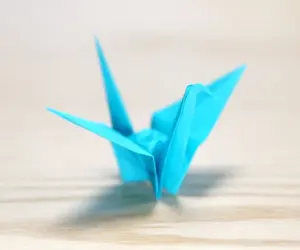


The most famous origami artists include Akira Yoshizawa, Robert J. Lang, Satoshi Kamiya, Tomoko Fuse, Eric Joisel, Sipho Mabona, Hoang Tien Quyet, and the Demaines. Together, these artists represent modern notation, wet-folding, super-complex design, modular construction, mathematical origami, monumental installation, and sculptural paper art.
Key Facts at a Glance
- Akira Yoshizawa created more than 50,000 designs and helped establish modern origami as a serious art form.
- Robert J. Lang applies computational methods to complex crease patterns and deployable engineering structures.
- Satoshi Kamiya is known for highly detailed single-sheet models, including dragons, insects, and mythological creatures.
- Tomoko Fuse is one of the defining figures in modular origami, where separate units form larger geometric sculptures.
- Wet-folding uses damp, usually thicker paper to create rounded animal and human forms.
- Origami artists work across fine art, mathematics, education, architecture, medicine, aerospace, and public installation.
Who Is the Most Influential Origami Artist?
Akira Yoshizawa is the most influential modern origami artist because he changed origami’s design language, teaching methods, and public reputation. His expressive animal models, wet-folding technique, and collaboration on the Yoshizawa-Randlett diagramming system gave folders a shared way to design and communicate models across languages.
Yoshizawa was born in Japan in 1911 and died in 2005. His career connected traditional paper folding with modern sculpture, particularly through curved forms that suggested fur, muscle, beaks, wings, and clothing rather than simple geometric symbols.
The Yoshizawa-Randlett system was not Yoshizawa’s solo invention. American folder Samuel Randlett helped codify and popularize the diagrams, including mountain-fold and valley-fold symbols, arrows, sink folds, and reference lines. That distinction matters because origami’s modern growth depended on both model design and transferable notation.
Yoshizawa’s importance is therefore broader than his model count. He made a folded sheet communicate character. His work remains the best historical starting point for understanding why modern origami can function as sculpture rather than an activity limited to decorative objects.
How Did Modern Origami Develop?
Modern origami developed through several overlapping traditions rather than one invention or one country. Paper folding existed in Japan, Europe, China, and other regions in different forms, while the Japanese word origami combines oru, meaning “to fold,” with kami, meaning “paper.”
The term does not prove that every paper-folding tradition began in Japan. Historical folding practices included Japanese ceremonial forms, European napkin folding, German paper-folding education, and Chinese paper constructions. The modern international movement accelerated during the twentieth century through books, conventions, notation, and correspondence.
| Period | Development | Representative names | Lasting effect |
|---|---|---|---|
| Before 1900 | Ceremonial and recreational paper folding | Japanese and European makers | Established regional traditions |
| 1900-1950 | Educational and artistic revival | Friedrich Fröbel, Akira Yoshizawa | Connected folding with learning and design |
| 1950-1970 | International notation and organizations | Samuel Randlett, Lillian Oppenheimer | Made diagrams portable across languages |
| 1970-2000 | Technical and mathematical expansion | John Montroll, Toshikazu Kawasaki | Advanced insects, animals, geometry |
| 2000-present | Digital design and installation art | Lang, Kamiya, Mabona, Demaine | Expanded scale, complexity, and application |
“Pure” origami commonly means folding one sheet without cutting or glue, but usage varies. Kirigami includes cutting, glued modular constructions remain part of some contemporary practices, and artists may combine folded paper with wire, paint, lighting, or a supporting frame.
The Famous Origami Artists You Should Know
The list below is organized by contribution rather than celebrity ranking. A historically important artist may be the best person to study even when another folder produces more technically complex models.
1. Akira Yoshizawa: Best for Modern Artistic Origami
Akira Yoshizawa is the defining figure in modern artistic origami. His wet-folded animals and people use softened transitions, subtle shaping, and carefully controlled volume to make paper appear alive.
Yoshizawa designed tens of thousands of models, although the often-repeated figure of more than 50,000 refers to his lifetime output rather than a universally audited catalogue. His work includes birds, insects, mammals, figures, and abstract forms. The models are usually recognized by their expressive silhouettes and economical shaping.
His wet-folding method dampens sized paper so fibers become temporarily more pliable. The folder can then round a head, compress a torso, or shape a wing before the paper dries. Wet-folding does not make every fold easier. It reduces precision in some geometric details and leaves less opportunity for restarting.
Choose Yoshizawa if: you want expressive animals, historical context, or a bridge between craft and sculpture.
Do not start with Yoshizawa if: your priority is algorithmic crease-pattern design or sharply faceted geometry.
2. Robert J. Lang: Best for Mathematical Design
Robert J. Lang is the leading public interpreter of computational origami, using mathematics, algorithms, and software to design complex models with many appendages. His subjects include insects, birds, mammals, masks, and technical structures.
Lang’s earlier career included laser physics, and his engineering work has helped explain how folding principles can produce compact, deployable systems. Origami-inspired research has influenced expandable solar arrays, medical devices, airbags, and deployable structures, although an artist’s paper model is not automatically a finished engineering product.
Lang’s book Origami Design Secrets explains tree theory, circle packing, box pleating, and design strategy. His approach is especially useful for folders who want to create original models instead of only following diagrams.
Robert J. Lang often defines the medium in practical terms as “the art of folding paper.” The short definition hides a demanding design discipline: a successful model must allocate paper, preserve layer order, manage thickness, and remain foldable.
Choose Lang if: you enjoy geometry, coding, diagrams, and designing your own models.
Limitation: his most advanced work can be inaccessible without substantial practice in bases and crease patterns.
3. Satoshi Kamiya: Best for Super-Complex Models
Satoshi Kamiya is famous for single-sheet models with extreme detail, including dragons, mythological creatures, birds, insects, and fantasy figures. His designs often contain many layers and tiny flaps that require precise sequencing.
Kamiya’s Ancient Dragon and Ryujin models are widely recognized among advanced folders. Claims that particular versions require “millions” of folds are usually informal descriptions of extreme detail, not standardized counts. The practical point is clearer: these designs can take many hours, demand large thin paper, and punish small errors made near the beginning.
Super-complex origami often uses box-pleated or hybrid crease structures. The designer must reserve separate regions for horns, claws, toes, wings, tails, and facial features within a single square. The finished model may have hundreds of visible or hidden layers.
| Artist | Signature subject | Typical difficulty | Typical folding time |
|---|---|---|---|
| Satoshi Kamiya | Dragons and mythological creatures | Very high | 12-40+ hours |
| Robert J. Lang | Insects and animals | High to very high | 6-30 hours |
| John Montroll | Animals and birds | Intermediate to high | 1-8 hours |
| Jun Maekawa | Geometric and expressive forms | Intermediate to high | 1-10 hours |
Choose Kamiya if: you want a long-term technical challenge and highly detailed creatures.
Limitation: the diagrams and paper requirements are unsuitable for a first project.
4. Tomoko Fuse: Best for Modular Origami
Tomoko Fuse is one of the most important modular origami artists and authors. Her work assembles multiple folded units into polyhedra, kusudama, boxes, rings, and architectural structures.
A modular model distributes difficulty across repeated units. One unit may be simple, but a sculpture requiring 30, 60, or 120 units demands consistency, counting, and careful assembly. Fuse’s designs show that origami can derive visual complexity from repetition rather than from one impossibly dense crease pattern.
Modular folding can use interlocking pockets and flaps, so glue is often unnecessary. Some contemporary makers do use adhesive, thread, or internal supports, particularly for large installations. The term “kusudama” historically refers to ornamental spherical objects and has broader modern usage in origami communities.
Choose Fuse if: you like geometry, repetition, group projects, and three-dimensional construction.
Limitation: modular work can become repetitive, and assembly errors may remain hidden until the final units are added.
5. Eric Joisel: Best for Figurative Sculpture
French artist Eric Joisel brought a sculptor’s concern for anatomy, posture, surface, and mass to folded paper. His human figures, musicians, masks, and fantasy creatures have strong presence and often resemble modeled clay or carved material.
Joisel’s work belongs to post-traditional origami because it prioritizes sculptural interpretation over the simplified symbols of classic models. Wet-folding and shaping allow broad planes to transition into rounded forms, while the paper’s existing creases remain part of the object’s visual language.
His work is valuable for students who want to understand how a model communicates weight. A seated figure must distribute mass differently from a standing figure, and a musician’s instrument changes the relationship between the hands, torso, and head.
Choose Joisel if: you are interested in figures, masks, character, and sculptural composition.
Limitation: his approach offers fewer beginner-friendly diagrams than conventional animal origami.
6. Erik and Martin Demaine: Best for Computational Geometry
Erik Demaine and Martin Demaine are a father-son artist and mathematician team associated with computational origami, curved-crease folding, and mathematical sculpture. Their work investigates how paper can form curved surfaces and self-organizing structures.
The Demaines’ practice differs from traditional diagram-led origami. Instead of treating every crease as a straight construction line, curved-crease work explores bending, developable surfaces, and physical equilibrium. Paper may naturally settle into a shape when constraints and curvature are designed correctly.
Their research connects origami with algorithms and theoretical computer science. The artistic result can look soft, architectural, or biological, even though the underlying problem involves rigorous geometric constraints.
Choose the Demaines if: mathematics, self-folding behavior, and abstract sculpture interest you.
Limitation: curved-crease methods are harder to reproduce with ordinary square kami paper.
7. Sipho Mabona: Best for Monumental Installations
Sipho Mabona is known for large-scale origami, public installations, and a practice that connects paper transformation with cultural and environmental themes. His best-known projects include a life-sized elephant folded from a single approximately 15-meter square sheet.
Large origami changes the problem completely. At monumental scale, paper handling requires a team, a clear floor plan, reinforced edges, controlled humidity, and a folding sequence that may take days. A model that works at 20 centimeters may sag or tear when scaled to several meters.
Mabona’s work also demonstrates that origami can function as installation art. Viewers encounter the object spatially, rather than holding it in the hand or viewing it only from above.
Choose Mabona if: you want to study scale, public art, or the emotional impact of transformation.
Limitation: installation techniques require space and resources that individual folders rarely have.
8. Hoang Tien Quyet: Best for Fluid Animal Forms
Vietnamese artist Hoang Tien Quyet is recognized for elegant wet-folded animals with sweeping lines, reduced detail, and painterly surfaces. His birds and mammals often communicate movement through posture rather than through numerous anatomical flaps.
Quyet’s models show that complexity is not the same as realism. A restrained fold can suggest a wing, neck, or tail when the silhouette and proportion are carefully controlled. Thick paper, damp shaping, and watercolor-like color treatments support the soft visual effect.
His work is a useful counterpoint to Kamiya. Kamiya often maximizes anatomical detail, while Quyet frequently removes detail to preserve gesture and atmosphere.
Choose Quyet if: you prefer graceful animals, organic curves, and expressive minimalism.
Limitation: wet-folding requires judgment about moisture, and the finished form may not match a diagram exactly.
9. Toshikazu Kawasaki: Best for Mathematical Roses
Toshikazu Kawasaki is known for mathematical origami, especially the Kawasaki rose and studies of flat-foldable patterns. His work makes abstract geometry visible through curved petals, radial symmetry, and precisely controlled creases.
The Kawasaki rose is not a simple beginner flower. Its curved crease system requires accurate measuring, careful precreasing, and an understanding of how a flat sheet can produce a rounded bloom. Kawasaki’s mathematical contributions are also associated with conditions for flat-foldability, including relationships among angles around a vertex.
Choose Kawasaki if: you want geometry that produces an immediately recognizable object.
Limitation: curved creases are difficult to mark and maintain on cheap paper.
10. Eric Gjerde: Best for Tessellations
Eric Gjerde is a prominent designer and teacher of origami tessellations, repeating folded patterns that cover a sheet with pleats, twists, grids, and geometric motifs. Tessellations often remain relatively flat, making light, shadow, and repetition central to the result.
A tessellation differs from a conventional animal model because the whole sheet participates in the pattern. There may be no isolated head, wing, or tail. Instead, the design depends on symmetry, spacing, and the controlled collapse of repeated cells.
Choose Gjerde if: you like geometry, pattern, lighting, and meditative precreasing.
Limitation: tessellations consume time before the final three-dimensional effect becomes visible.
11. John Montroll: Best for Learnable Animal Design
John Montroll helped popularize systematic origami design through books and diagrams for animals, birds, insects, and geometric forms. His models occupy a useful middle ground: they introduce design logic without demanding the extreme layer density of super-complex models.
Montroll’s work is especially valuable for learners who want to progress from following diagrams to understanding how a base allocates flaps. His models can reveal why a bird needs a particular point, or how a mammal’s legs emerge from a preliminary structure.
Choose Montroll if: you want a structured path from intermediate folding to design study.
Limitation: folders seeking soft, sculptural surfaces may prefer wet-folding artists.
12. Lillian Oppenheimer: Best for Origami Education and Community
Lillian Oppenheimer was a major American organizer, educator, and advocate for origami. She founded the Origami Center of America, now associated with OrigamiUSA, and helped build the community infrastructure that allowed artists and folders to exchange ideas.
Oppenheimer’s contribution was not defined by one signature animal. Her influence came through teaching, exhibitions, correspondence, publishing, and institution building. Modern origami’s international reach depends on exactly this kind of network.
Choose Oppenheimer if: you want to understand how origami became an organized global art community.
Limitation: her legacy is easier to encounter through archives and organizations than through a single famous model.
Which Origami Styles Matter Most?
The major styles differ by construction method, visual goal, and paper behavior. Wet-folding favors organic volume, modular origami uses repeated units, tessellations use repeated crease fields, and super-complex origami allocates many appendages from one sheet.
| Style | Sheet structure | Typical paper | Typical time | Representative artist |
|---|---|---|---|---|
| Traditional | One square, simple bases | 50-70 GSM kami | 2-20 minutes | Akira Yoshizawa |
| Modular | 10-120 separate units | Tant or kraft, 70-100 GSM | 2-12 hours | Tomoko Fuse |
| Wet-folding | One sheet, damp sculpting | Sized paper, 100-200 GSM | 1-8 hours | Hoang Tien Quyet |
| Tessellation | Repeating grid or motif | Thin foil or tissue, 30-60 GSM | 3-15 hours | Eric Gjerde |
| Super-complex | One sheet, many flaps | Tissue foil, 30-50 GSM | 8-40+ hours | Satoshi Kamiya |
| Curved-crease | Curved lines and surfaces | Thin flexible paper | 2-20 hours | Erik and Martin Demaine |
Origami categories overlap. A model can be both wet-folded and representational, or both modular and geometric. “Complex” describes construction difficulty, not necessarily artistic quality.
Why Does Mathematics Matter in Origami?
Mathematics matters because paper cannot stretch, so every successful design must respect geometric and physical constraints. Flat-foldability, layer order, angle relationships, circle packing, and rigid-folding behavior determine whether a crease pattern can become the intended model.
The Huzita-Justin axioms describe idealized operations involving points and lines, such as folding one point onto another or aligning two points with two lines. Kawasaki’s theorem addresses angle relationships around certain flat-foldable vertices. These principles help designers test whether a pattern is plausible before spending hours folding it.
Mathematics does not replace artistic judgment. A mathematically valid crease pattern can still produce an awkward animal, weak silhouette, or visually confusing surface. The most effective designers combine geometric allocation with proportion, posture, negative space, and material control.
Where Does Origami Leave the Gallery?
Origami-inspired engineering uses folding to package large structures into small volumes and deploy them when needed. NASA-related research has examined foldable spacecraft components, while medical engineers have studied stents and other devices whose compact forms expand inside the body.
The Miura-ori pattern is a well-known example of rigid-foldable geometry. Its repeating parallelograms allow a sheet to compress and expand efficiently, which makes the pattern relevant to maps, solar panels, deployable structures, and material science. Engineering prototypes require testing, hinges, tolerances, and materials that differ from ordinary paper.
Origami artists contribute concepts and visual models, but a paper sculpture is not proof that a device is safe or manufacturable. That limitation is important when describing the relationship between art and engineering.
What Paper and Tools Do Artists Use?
Paper choice determines whether a complex model survives layer accumulation, reverse folds, sinks, and shaping. Beginners usually need inexpensive 15-by-15-centimeter kami, while advanced folders often need thin, strong sheets from 30 to 100 centimeters wide.
Typical figures vary by supplier and region. Origamido, tissue foil, Elephant Hide, Tant, handmade washi, and watercolor paper each behave differently because sizing, fiber direction, coating, and thickness matter as much as GSM.
| Use case | Typical size | Typical weight | Typical price | Suitable material |
|---|---|---|---|---|
| Beginner crane | 15 x 15 cm | 50-70 GSM | $5-$15 per 500 sheets | Kami |
| Modular kusudama | 7.5-15 cm units | 70-100 GSM | $8-$20 per 100 sheets | Tant or kraft |
| Tessellation | 30-50 cm square | 30-60 GSM | $2-$8 per sheet | Glassine or foil |
| Wet-folded animal | 25-50 cm square | 100-200 GSM | $3-$20 per sheet | Sized watercolor paper |
| Super-complex dragon | 50-100 cm square | 30-50 GSM | $15-$60 per sheet | Tissue foil or handmade paper |
A bone folder can sharpen precreases, but experienced folders do not force every crease with maximum pressure. Excessive pressure can weaken fibers, especially in thin tissue foil. For wet-folding, methyl cellulose may strengthen and size paper, but the treatment requires testing because too much moisture or adhesive changes the folding behavior.
What Does Advanced Origami Cost?
Advanced origami typically costs $15-$60 for a premium single sheet, while a beginner can practice for less than $15 per large pack. The model itself may take 8-40 hours, and the largest installation projects add transport, workspace, assistants, mounting, and conservation costs.
| Project | Material cost | Labor time | Extra requirement | Typical total context |
|---|---|---|---|---|
| Simple crane | Under $0.05 per sheet | 2-10 minutes | Flat surface | Low-cost practice |
| Modular sphere | $8-$20 per pack | 2-10 hours | Unit counting | Group-friendly |
| Wet-folded animal | $5-$25 per sheet | 2-8 hours | Drying space | Moderate |
| Super-complex model | $15-$60 per sheet | 8-40+ hours | Large clean table | High commitment |
| Public installation | $100s-$1,000s+ | Days to months | Team and transport | Commission-dependent |
These are typical practitioner ranges, not universal prices. Handmade paper, imported materials, exhibition framing, and artist commissions can exceed them substantially.
What Problems Do Advanced Folders Face?
The most common advanced-origami failures are accumulated alignment errors, paper thickness, overworked fibers, and incorrect moisture. A one-millimeter error near a reference crease can become a major layer mismatch after dozens of folds.
A second problem is treating all paper as interchangeable. Printer paper may be acceptable for testing a simple base, but its 75-90 GSM thickness becomes destructive in dense models. Tissue foil handles layers well but records every accidental crease and rarely returns cleanly to a blank sheet.
A third problem is finishing too early. Folders often collapse a model before checking that all flaps are in the correct layer order. Advanced instructions may require a reversal, sink, closed-sink, or multi-layer fold that cannot be repaired once the surrounding structure is compressed.
How Can You Prevent Tearing and Misalignment?
Prevent tearing by choosing paper for layer density, precreasing accurately, and limiting unnecessary unfolding. Prevent misalignment by using reference points, rotating the model frequently, and checking symmetry before locking a major collapse.
Use these practitioner rules:
- Test the paper with a small section of the crease pattern before committing to the full model.
- Mark only essential reference points, because heavy pencil lines remain visible on thin paper.
- Flatten layers gradually instead of forcing one large collapse.
- Stop when the paper resists sharply; resistance may indicate a wrong layer, not insufficient strength.
- Keep wet-folded models slightly damp during shaping, then allow complete drying before final display.
One counterintuitive rule matters: sharper creases do not always produce better origami. Geometric models benefit from crisp lines, but wet-folded animals need controlled softness around the head, torso, and joints.
Which Artist Should You Study First?
The best artist depends on the folder’s goal rather than on a universal ranking. Start with Yoshizawa or Montroll for recognizable forms, Fuse for repeated geometry, Quyet for wet-folding, Lang for design theory, and Kamiya only after you can manage long diagrams and thin paper.
| Folder profile | Best starting artist | First project type | Recommended paper | Expected time |
|---|---|---|---|---|
| Absolute beginner | Akira Yoshizawa | Crane or simple animal | 15 cm kami | 5-20 minutes |
| Geometry learner | Tomoko Fuse | Modular polyhedron | Tant, 7.5-15 cm | 2-6 hours |
| Animal sculptor | Hoang Tien Quyet | Wet-folded bird | 25-35 cm sized paper | 1-4 hours |
| Design student | Robert J. Lang | Base and crease study | 30-50 cm tissue foil | 4-12 hours |
| Advanced technician | Satoshi Kamiya | Complex creature | 50-100 cm thin paper | 12-40+ hours |
| Pattern specialist | Eric Gjerde | Tessellation grid | 30-50 cm thin sheet | 3-15 hours |
For most people, the most efficient path is not the most spectacular model. Learn valley folds, mountain folds, reverse folds, sinks, squash folds, and bases before attempting a dragon with hundreds of steps.
Is Origami Fine Art or Craft?
Origami can be fine art, craft, design, education, performance, or engineering research, depending on the work’s purpose and presentation. A folded object becomes fine art through decisions about form, material, meaning, scale, context, and authorship, not because it reaches a particular fold count.
A traditional crane made in a classroom and a monumental elephant made for a gallery both use folding, but they operate in different contexts. Neither category is automatically superior. Craft emphasizes process and repeatability, while fine art may emphasize interpretation, installation, social meaning, or singular form.
The strongest origami artists move between categories. Yoshizawa used craft technique for expressive sculpture; Lang connects design with mathematics; Mabona uses folding in public installations; Fuse turns repeated units into architectural geometry.
FAQ
Who invented origami?
No single person invented origami. Paper folding developed through several cultural traditions, including Japanese ceremonial practices and European educational and decorative folding. Akira Yoshizawa did not invent origami, but he became the central modern innovator who transformed its notation, technique, and artistic reputation.
What is the hardest origami model?
The hardest model depends on paper, diagram quality, layer density, and the folder’s experience. Satoshi Kamiya’s dragons are widely regarded as extreme challenges, while some curved-crease sculptures and mathematically designed tessellations are harder to reproduce because they require specialized geometry rather than only long instructions.
Is Robert Lang better than Satoshi Kamiya?
Robert Lang and Satoshi Kamiya represent different strengths, so one is not objectively better. Lang is especially influential in computational design and mathematical explanation, while Kamiya is renowned for intricate single-sheet creatures. Choose Lang for design theory and Kamiya for advanced model-folding challenges.
Can beginners fold famous artists’ models?
Beginners can fold simplified models associated with famous artists, especially designs by Akira Yoshizawa and John Montroll. Beginners should avoid super-complex Kamiya models, dense Lang crease patterns, and large wet-folded sculptures until they can follow multi-step diagrams accurately and control paper alignment.
What is the difference between origami and kirigami?
Origami traditionally emphasizes folding without cutting, while kirigami permits cutting as a central construction method. Contemporary artists sometimes combine folding, cutting, adhesive, paint, wire, or supports, so the boundary depends on the artist’s stated process and the work’s intended classification.
Why do origami artists use one square sheet?
A single uncut square creates a demanding design constraint: every feature must come from the original paper, and no material can be added to repair a poor allocation. The constraint encourages efficient bases, mathematical planning, and visual economy, although modular and mixed-media origami follow different rules.
The Bottom Line
The famous origami artists you should know are not famous for one identical reason. Akira Yoshizawa established modern artistic language, Robert J. Lang formalized computational design, Satoshi Kamiya pushed single-sheet complexity, Tomoko Fuse expanded modular geometry, and artists such as Eric Joisel, Sipho Mabona, Hoang Tien Quyet, Eric Gjerde, and the Demaines widened origami’s sculptural, mathematical, and installation possibilities.
Start with the artist whose method matches your goal. Choose Yoshizawa for expressive forms, Fuse for geometry, Quyet for wet-folding, Lang for design, or Kamiya for technical endurance. Then select paper and project scale to match the technique, because material control determines whether an ambitious model becomes a sculpture or a damaged sheet.
