
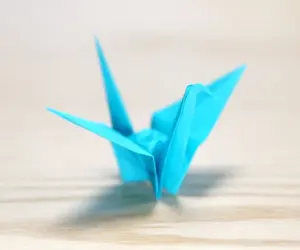


Learning origami takes about 1-2 weeks for basic models, 1-3 months for intermediate designs, and 6-24 months for advanced folding when practiced for roughly 20-30 minutes a day. Origami progress depends more on practice quality, crease accuracy, paper choice, and model difficulty than on calendar time alone.
Key Facts at a Glance
- A beginner can usually fold recognizable cranes, boxes, frogs, hearts, and planes within 1-2 weeks.
- Thirty minutes of focused practice per day produces about 3.5 hours of folding each week.
- Intermediate origami commonly takes 1-3 months and includes multi-layered flowers, flapping birds, and modular units.
- Advanced realistic animals, tessellations, and crease patterns commonly require 6-12 months.
- Super-complex insects, dragons, and original designs can require 2 years or more.
- Standard kami paper costs roughly $8-$18 for packs of 100-500 small sheets, while specialty tissue foil may cost $3-$5 per large sheet.
How Long Does It Take to Learn Origami?
Basic origami generally takes 5-15 hours of deliberate practice, while advanced origami takes 100-500 or more hours. A person folding for 30 minutes daily may reach basic competence in 1-2 weeks, intermediate competence in 1-3 months, and advanced competence in 6-12 months.
The phrase “learn origami” describes several different outcomes. Folding one crane from a video is a small task. Reading unfamiliar diagrams, choosing suitable paper, correcting a distorted base, and designing a model from a crease pattern represent substantially higher skills.
The following ranges are typical practitioner estimates rather than results from a standardized scientific study. They assume regular practice, beginner-friendly instructions, and a learner who folds carefully rather than rushing through repeated steps.
| Skill level | Typical calendar time | Approximate practice hours | Observable ability |
|---|---|---|---|
| Beginner | 1-2 weeks | 5-15 hours | Folds 5-10 simple models with guidance |
| Intermediate | 1-3 months | 25-60 hours | Reads diagrams and handles compound folds |
| Advanced | 6-12 months | 90-180 hours | Folds complex animals and dense bases |
| Super-complex | 2+ years | 300-1,000+ hours | Handles crease patterns or designs original models |
Calendar time changes when sessions become irregular. Two focused 30-minute sessions each week will not produce the same progress as six sessions, even if both learners remain “active” for three months.
Is Origami Hard to Learn?
Origami is easy to begin but difficult to perform precisely. The first models require a small vocabulary of folds, whereas advanced models demand spatial visualization, controlled layers, accurate references, and the ability to manage paper thickness.
Britannica describes origami as “the art of folding objects out of paper.” Traditional origami normally uses one square sheet without cutting, glue, or tape. Kirigami permits cutting, while modular origami assembles multiple folded units, so the boundaries matter when comparing difficulty.
Origami also changes paper mechanics. Creases create preferred bending lines, compress some regions, and stiffen others; a flat sheet therefore gains rigidity, tension, and three-dimensional structure. A small error near the beginning can shift several reference points later, which explains why precision affects difficulty more than hand strength.
| Beginner factor | Lower difficulty condition | Higher difficulty condition | Typical consequence |
|---|---|---|---|
| Model length | 10-25 steps | 80-200 steps | More opportunities for accumulated error |
| Paper size | 15-20 cm square | 10-15 cm square | Smaller layers become harder to manipulate |
| Paper thickness | 60-80 gsm kami | 100-150 gsm specialty paper | Thick layers resist compression |
| Instruction type | Slow video with pauses | Dense crease pattern | More spatial interpretation is required |
| Symmetry demand | Approximate animal shape | Tessellation or geometric box | A small offset remains visible throughout |
A useful practitioner rule is to judge difficulty by the number of layers at the end, not by the number of numbered steps alone. A 40-step model with four thin layers may be easier than a 25-step model that compresses eight layers into a narrow tip.
What Should Beginners Learn First?
Beginners should learn diagram symbols, valley and mountain folds, reverse folds, squash folds, and two or three common bases before attempting complex animals. The traditional crane is useful, but repeating one model should support technique rather than become the entire curriculum.
Step 1: Read the Folding Language
The Yoshizawa-Randlett system uses standardized symbols for common origami actions. A dashed line usually indicates a valley fold, a dash-dot line commonly indicates a mountain fold, and arrows show movement, unfolding, or repeated action.
A video can demonstrate hand position, but diagrams teach transferable visual language. Use both when possible: watch one complete demonstration, then refold the model from diagrams without replaying every movement.
Step 2: Practice Foundational Folds
Spend the first two or three sessions on accurate valley folds, mountain folds, diagonal folds, inside-reverse folds, outside-reverse folds, squash folds, and rabbit-ear folds. Fold each action on 15-20 cm practice paper so the creases remain visible without excessive material cost.
The success checkpoint is simple: the edges meet along their full length, the crease begins at the intended point, and the sheet opens without a broad accidental wrinkle. Soft creases make later folds ambiguous.
Step 3: Learn Core Bases
The kite, preliminary, waterbomb, bird, and fish bases appear across many traditional and modern models. Learning a base reduces cognitive load because the learner recognizes a structure instead of treating every diagram as unrelated.
| Base | Common models | Main skill developed | Typical learning time |
|---|---|---|---|
| Kite base | Simple birds, leaves, fish | Symmetric diagonal alignment | 20-40 minutes |
| Preliminary base | Pinwheel, frog, bird models | Squash and reverse folds | 30-60 minutes |
| Waterbomb base | Balloons, frogs, flowers | Inverting and shaping volume | 20-45 minutes |
| Bird base | Crane, flapping bird, eagle | Petal folds and thin points | 45-90 minutes |
| Fish base | Fish, whales, aquatic animals | Layer control and shaping | 30-75 minutes |
Step 4: Repeat for Memory
Fold a simple model 5 times to diagnose errors, then fold it another 10-20 times if memorization matters. Repetition develops motor memory, but repeating a flawed sequence can also automate the flaw, so compare the result against a reference after each early attempt.
A crane folded from memory is not proof of general mastery. It proves that one sequence has become familiar. Transfer begins when the learner can use the same reverse fold or bird base in an unfamiliar model.
Are Videos or Diagrams Better for Learning Origami?
Videos are usually faster for a first model, while diagrams are better for independent progression and complex reference work. Beginners benefit from video demonstrations of hand movements, but printed diagrams make pausing, comparing layers, and revisiting a specific step easier.
| Learning method | Best use | Typical session length | Main limitation |
|---|---|---|---|
| Video tutorial | First simple model | 15-40 minutes | Fast demonstrations can hide alignment details |
| Printed diagram | Repeated practice | 20-90 minutes | Requires symbol and layer interpretation |
| Photo sequence | Intermediate shaping | 20-60 minutes | Fewer motion cues than video |
| Crease pattern | Advanced design analysis | 1-8 hours | Does not prescribe every folding movement |
| Instructor or class | Correcting technique | 45-120 minutes | Availability and lesson cost vary |
For a first month, use videos for three or four traditional models, then refold at least two from diagrams. This transition exposes whether the learner understands the structure or is merely imitating hand movements.
An honest limitation applies to both formats: neither can fully correct a paper choice that is inappropriate for the design. A beginner video using thin kami cannot be followed reliably with thick card stock.
How Long Does One Origami Model Take?
A simple origami model usually takes 2-10 minutes, an intermediate model takes 15-45 minutes, and an advanced model takes 1-3 hours. Super-complex designs may require 10-40 hours, often spread across several sessions because folding and shaping become physically tiring.
The first attempt is usually slower than the second. A 20-step box may take 15 minutes while reading instructions, then 4 minutes after the sequence becomes familiar. A complex insect may remain slow even after practice because each layer must be located and compressed precisely.
| Model category | Example | First attempt | Experienced fold |
|---|---|---|---|
| Simple traditional | Plane, heart, fortune teller | 5-15 minutes | 2-5 minutes |
| Basic animal | Crane, frog, fish | 10-30 minutes | 5-15 minutes |
| Intermediate | Flapping bird, lotus, Kawasaki rose | 30-90 minutes | 15-45 minutes |
| Advanced animal | Eagle, reindeer, detailed mammal | 2-5 hours | 1-3 hours |
| Super-complex design | Dragon, insect, multi-limbed creature | 10-40+ hours | 6-20 hours |
Model time also includes preparation. Cutting a square from letter-size paper, reversing unclear steps, testing paper thickness, and shaping a final model can add 10-30 minutes beyond the numbered folding sequence.
What Practice Schedule Works Best?
A 20-30-minute session on 5 or 6 days each week is the most practical beginner schedule. Short, repeated sessions improve crease control more reliably than one exhausting weekly session, especially when the learner is still developing spatial awareness.
Use a three-part session: spend 5 minutes warming up with straight and diagonal folds, 15-20 minutes on one model or technique, and the final 5 minutes reviewing the failed step and storing the model with its instructions.
| Schedule | Weekly folding time | Likely result after one month | Best fit |
|---|---|---|---|
| 10 minutes, 3 days | 30 minutes | Familiarity with simple models | Very limited availability |
| 20 minutes, 5 days | 100 minutes | 6-10 beginner models | Most casual learners |
| 30 minutes, 6 days | 180 minutes | Beginner to early intermediate | Consistent hobbyists |
| 60 minutes, 5 days | 300 minutes | Intermediate progress | Learners targeting complex models |
| 2 hours, 2 days | 240 minutes | Uneven technique and fatigue risk | Weekend-only schedules |
The most effective practice variable is error review. When a model collapses at step 18, reopen it to step 10 and find the first inaccurate reference rather than forcing the final shape.
How Much Does It Cost to Start Origami?
A beginner can start origami for $0 using accurately cut printer paper, or for approximately $8-$18 with a pack of 100-500 sheets of kami. Specialty papers become useful after the learner understands basic folds, but expensive paper cannot compensate for poor alignment.
A 15-20 cm square is an efficient beginner size because it provides enough surface area for finger placement and remains inexpensive. Standard letter or A4 paper works for practice if cut into squares, although printer paper is often less crisp and less colorfast than kami.
| Paper type | Typical quantity and price | Best stage | Main trade-off |
|---|---|---|---|
| Printer paper | 75-90 gsm, under $0.10 per sheet | First folds and large tests | Weak creases and limited color |
| Kami | 60-80 gsm, $8-$18 per 100-500 sheets | Beginner traditional models | Tears under repeated dense folding |
| Tant | About $13-$25 per 50 sheets | Display models and modular units | Stiffer layers need stronger creases |
| Washi or chiyogami | About $15-$30 per pack or kit | Decorative surfaces | Texture can obscure crease lines |
| Tissue foil | About $3-$5 per large sheet | Complex animals and many layers | Costly, delicate, and harder to cut |
Use kami for cranes, boxes, frogs, and preliminary bases. Move to Tant or another stronger paper for modular structures, and use tissue foil when a complex model requires thin but shape-retaining layers.
Which Origami Style Fits Your Goal?
Traditional origami is the fastest route to basic competence, modular origami rewards repetition, wet folding supports organic sculpture, and tessellations demand geometric precision. The best style depends on whether the learner values recognizable objects, mathematical structure, smooth shaping, or original design.
| Origami style | Sheet requirement | Typical first project time | Suitable goal |
|---|---|---|---|
| Traditional | One square sheet | 5-45 minutes | Animals, gifts, and fundamentals |
| Modular or kusudama | 6-300 identical units | 1-20 hours total | Geometric structures and repetition |
| Wet folding | Thick damp paper | 1-4 hours | Curved mammals and sculptural forms |
| Tessellation | One sheet and grid | 2-10 hours | Repeating geometry and surface texture |
| Box pleating | One sheet with measured grid | 3-20 hours | Complex insects and crease-pattern design |
Modular origami can feel easier at the unit level because one small error may not ruin the entire structure. It takes longer overall because a kusudama made from 30 units requires repeated folding and assembly.
Wet folding is not a beginner shortcut. Damp paper permits rounded forms, but excess water weakens fibers, and a model can lose definition while drying if the shaping is inaccurate.
How Long Does Origami Take for Children?
Many children can fold simple origami in 10-20 minutes, while consistent independent learning usually develops over 4-8 weeks. Children under roughly 7 often need larger paper, visual demonstrations, and adult help with precise alignment, although individual fine-motor skills vary widely.
Start with planes, boats, hats, simple animals, and jumping frogs rather than a crane if frustration tolerance is low. Use 20 cm paper, limit sessions to 15 minutes, and define success as completing one action accurately instead of finishing an entire model.
| Learner situation | Recommended paper | Session length | Suitable first target |
|---|---|---|---|
| Preschool child | 20-25 cm, thin paper | 5-10 minutes | Boat or hat |
| Early primary school | 18-20 cm kami | 10-20 minutes | Frog or simple animal |
| Older child | 15-20 cm kami | 20-30 minutes | Crane or modular unit |
| Child with low frustration tolerance | 20-25 cm, high-contrast paper | 5-15 minutes | 4-8 step model |
| Family activity | 20 cm paper per person | 30-45 minutes | Two simple models |
Children often progress quickly when the adult folds a parallel model rather than taking over the child’s paper. Taking over produces a finished object but less transferable skill.
Why Do Beginners Get Stuck?
Beginners usually get stuck because of inaccurate references, hidden layers, unsuitable paper, or a skipped fold rather than because the model is inherently impossible. The first diagnostic question should be, “At which earlier step did the model stop matching the diagram?”
Alignment Drift
A corner that misses its target by 0.5 mm can produce several millimeters of displacement after many folds. Align corners and edges before pressing the crease, then inspect the unfolded reference lines before continuing.
Unclear Layer Management
Complex diagrams may show only the visible surface while a hidden flap remains underneath. Open the model one step and compare the mountain and valley crease directions instead of pulling harder on an uncertain layer.
Overly Thick Paper
Standard construction paper is often too thick for dense models because layers cannot flatten. Test the design with 70-80 gsm paper before switching to a display stock.
Weak Creases
A crease should extend from the correct endpoint through the intended region. Press from the center outward with a fingernail or bone folder, but avoid scraping the surface because polished paper can split along repeated lines.
Skipped Skill Levels
An 80-step dragon on the third day creates several simultaneous problems: unfamiliar symbols, poor layer control, and insufficient paper judgment. Fold three simpler models using the same base or compound fold, then return to the difficult design.
How Can Someone Recover From a Failed Model?
Recovering from a failed model requires identifying the earliest wrong reference, flattening only as far as necessary, and repeating that section with larger or thinner paper. Restarting from a fresh sheet is faster when the crease map contains several conflicting lines or the paper has become soft.
Use this recovery sequence:
- Photograph the failed model before unfolding it.
- Identify the last step that matched the reference.
- Unfold to that step without reversing unrelated creases.
- Mark the target points lightly on scrap paper if the diagram is ambiguous.
- Repeat the step at half speed.
- Compare symmetry and layer count before continuing.
A model that looks wrong at the final shaping stage may still contain a correct base. A model with an incorrect base rarely becomes correct through stronger pinching.
How Long Until You Can Design Original Origami?
A learner can modify an existing simple model after 1-3 months, create basic original forms after 6-12 months, and pursue complex original animals after 2 or more years. Designing requires a different skill set from following instructions because the creator must plan proportions, crease allocation, paper thickness, and collapse behavior.
There are two major design routes. Box pleating organizes points on a rectangular grid and works well for insects, animals, and figures. Tree theory and circle-packing methods help designers allocate flaps mathematically, while freeform experimentation suits simple decorative models.
| Design milestone | Typical time to reach | Required capability | Example outcome |
|---|---|---|---|
| Modification | 1-3 months | Adjusts an existing flap or proportion | Longer ears on a rabbit |
| Simple original | 6-12 months | Plans folds and tests prototypes | Basic bird or flower |
| Structured design | 12-24 months | Uses grids, bases, and references | Recognizable animal |
| Complex original | 2-5 years | Manages dense crease patterns | Detailed insect or dragon |
The first original design will often be less attractive than a published model. That is normal. Design practice measures whether the intended structure can be produced and refined, not whether the first prototype is display-ready.
What Is the Most Efficient Learning Path?
The most efficient route is a 12-week progression from basic folds to independent intermediate models. Each phase should end with an observable test, because a calendar deadline without a performance benchmark can create false confidence.
| Phase | Weeks | Practice focus | Completion test |
|---|---|---|---|
| Vocabulary | 1-2 | Valley, mountain, reverse, squash, rabbit-ear folds | Completes 5 simple models |
| Bases | 3-4 | Kite, preliminary, waterbomb, bird, fish | Identifies bases in new diagrams |
| Control | 5-8 | Layer alignment, shaping, symmetry | Folds 2 intermediate models |
| Independence | 9-12 | Diagram reading and error recovery | Finishes a model without video |
| Advanced preparation | Month 4 onward | Dense layers, specialty paper, tessellations | Completes 60-100-step designs |
At least half of each practice session should involve folding, not watching tutorials. Watching can build familiarity, but hand control develops only when the learner creates and corrects creases.
When Should You Change Paper or Model Difficulty?
Change paper after the learner can complete the model’s basic structure accurately on inexpensive stock. Change model difficulty when the current model can be folded twice consecutively with matching proportions and no unexplained step errors.
Move from kami to Tant when a display model needs stronger color and surface rigidity. Move to tissue foil when a complex design has many layers that must compress, not simply because tissue foil appears in advanced tutorials.
Move up in difficulty when the current model feels predictable. A suitable next model introduces one new technique, not six unfamiliar techniques at once.
The Bottom Line
How long does it take to learn origami? Most people need 1-2 weeks to learn basic models, 1-3 months to become comfortable with intermediate diagrams, and 6-24 months to handle advanced or original work. Practice for 20-30 minutes on most days, use inexpensive 15-20 cm paper, and measure progress by accurate folds and independent problem-solving.
Origami is inexpensive at the beginning and demanding at the highest levels. A $10 pack of kami can support weeks of training, while complex designs may require specialty paper and several hours per model. The fastest learner is not the person who folds the most pages, but the person who notices and corrects the earliest error.
Frequently Asked Questions
Can I Learn Origami in One Week?
You can learn the fundamentals of origami in one week if you practice for about 20-30 minutes on five or six days. A realistic result is completing several simple models, recognizing valley and mountain folds, and understanding a few compound folds. One week is not enough for advanced animals or independent design.
Do I Need Special Origami Paper?
You do not need special paper to begin origami. Clean printer paper cut into accurate squares works for large practice models, while 60-80 gsm kami is easier to crease and more affordable for repeated folding. Specialty Tant, washi, and tissue foil become useful when model layers, display quality, or sculptural shaping demand them.
Is Origami Good for Improving Fine-Motor Skills?
Origami provides repeated practice in bilateral coordination, finger pressure, visual alignment, and sequential instruction. The activity can support fine-motor development, but origami should not be treated as a medical intervention or a replacement for occupational therapy when a child or adult has a diagnosed motor difficulty.
How Many Times Should I Fold a Crane?
Fold a crane 5 times to identify its difficult steps and approximately 10-20 additional times to build reliable motor memory. Folding 20-30 cranes can make the sequence automatic, but the practice has limited transfer unless you also fold models using related bird-base, reverse-fold, and petal-fold techniques.
Is Modular Origami Easier Than Traditional Origami?
Modular origami is often easier per unit but slower overall. A single unit may take 2-8 minutes and tolerate a small error, while a 30-unit kusudama can require 2-6 hours of folding and assembly. Traditional origami offers faster feedback and develops more varied single-sheet folding skills.
Can Adults Learn Origami Quickly?
Adults can learn basic origami quickly, often reaching simple-model competence within 1-2 weeks of regular practice. Adults may progress faster with diagrams and spatial reasoning, but children can develop excellent technique through repetition. Age matters less than paper control, visual instruction, patience, and the consistency of practice.
