

Tacky glue is usually the better choice for origami, paper, fabric, and projects that need a thin, flexible, repositionable bond. Hot glue is better for fast assembly, gap filling, temporary fixtures, and rough craft materials, but it creates a thicker joint and requires heat protection. The correct choice depends on material, bond thickness, adjustment time, and exposure to heat or water.
Key Facts at a Glance
- Tacky glue is generally a high-viscosity, water-based PVA or PVA-modified emulsion that dries as water leaves the adhesive film.
- Hot glue is a thermoplastic adhesive, commonly based on EVA, that bonds when melted and sets as it cools.
- Tacky glue normally allows minutes for alignment, while hot glue often provides only seconds before the joint skins over.
- Tacky glue creates a thinner and more flexible bond, which matters for folded paper and wearable fabric.
- Hot glue fills gaps better than tacky glue, but its cured bead can remain bulky, hard, and vulnerable to high temperatures.
- Neither adhesive is a universal structural glue for outdoor, load-bearing, high-heat, or continuously wet applications.
What Is the Difference Between Tacky Glue and Hot Glue?
Tacky glue cures by evaporation, while hot glue sets by cooling. Tacky glue begins as a liquid polymer dispersion, usually with water as the carrier; hot glue begins as a solid polymer stick that a heated gun turns into a flowing melt.
That difference controls the entire user experience. A water-based adhesive can be spread thinly, adjusted after application, and cleaned with water while still wet. A hot-melt adhesive can grab quickly and bridge an uneven gap, but the operator must position the parts before the bead cools.
“Tacky” describes wet grab rather than a separate universal chemical family. Product labels vary. Aleene’s Original Tacky Glue, for example, is marketed for craft materials and differs from a specialized fabric adhesive, while industrial hot-melt sticks can use formulations very different from hobby EVA sticks.
How the Adhesives Work
Tacky glue forms a polymer film as water evaporates into the air or migrates into a porous substrate. The adhesive becomes progressively less mobile, then reaches a dry state; thick applications dry more slowly because water has farther to travel.
Hot glue undergoes a physical phase change. The gun heats a thermoplastic stick, the melt wets the substrate, and cooling creates a solidified polymer bead that grips surface irregularities. No drying period removes water, but the joint can soften again when reheated near its formulation-specific softening range.
The bond is often mechanical rather than deeply penetrating. Smooth, low-energy plastics may reject hot glue even when the adhesive feels aggressive, because the cooled bead has insufficient surface wetting or peel resistance.
Master Comparison: Tacky Glue Versus Hot Glue
| Decision factor | Tacky glue | Hot glue |
|---|---|---|
| Chemical family | Water-based PVA or modified PVA emulsion | Thermoplastic hot melt, often EVA |
| Application temperature | Typical room temperature, 18-25°C | Typical gun melt range, 120-200°C |
| Useful adjustment time | About 30 seconds to 10 minutes | About 5-30 seconds |
| Initial handling time | Typical 10-60 minutes | Typical 30-120 seconds |
| Full practical cure | Often 12-24 hours | Usually after cooling, about 1-5 minutes |
| Bond profile | Thin, smooth, flexible film | Raised bead, rigid to semi-flexible |
| Best paper behavior | Low distortion when spread thin | Can wrinkle, dent, or show through |
| Tool requirement | Bottle, brush, or precision tip | Electrically heated glue gun |
| Typical starter cost | $3-$8 for 4-8 fluid ounces | $10-$40 gun, plus $5-$15 per 50 sticks |
| Wet cleanup | Water and soap before drying | Not water-soluble after cooling |
| Main safety issue | Skin and eye irritation from product contact | Burns from nozzle and molten adhesive |
| Main failure mode | Weak or slow bond from excess moisture | Peeling, stringing, or a cold joint |
The time ranges are typical craft-use figures, not universal specifications. Manufacturer instructions control because viscosity, solids content, stick diameter, gun wattage, room temperature, and substrate porosity can change performance substantially.
Which Glue Is Best for Origami and Paper?
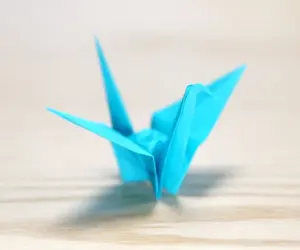
Tacky glue is the better default for origami, cardstock, paper sculpture, scrapbooking, and book-art assemblies because a thin PVA film preserves folds and adds less bulk. Hot glue is suitable mainly for hidden internal supports, large paper structures, or rapid attachment of non-paper components.
Origami creates unusually strict adhesive requirements. A folded model depends on crisp creases, low added mass, and predictable flexibility. A thick hot-glue bead can prevent a flap from closing flat, telegraph through thin kami paper, and shift the model’s center of gravity.
For origami, apply tacky glue with a fine nozzle, needle-tip bottle, or small synthetic brush. A practical starting quantity is a line approximately 0.5-1 millimeter wide on cardstock, or small dots under 1 millimeter on thin paper. Press with a bone folder through release paper rather than squeezing the wet joint with bare fingers.
Paper Adhesive Selection
| Paper project | Recommended adhesive | Application amount | Hold or cure guidance |
|---|---|---|---|
| 70-90 gsm origami paper | Thin tacky glue dots | Under 1 mm per dot | Press 30-60 seconds |
| 160-300 gsm cardstock | Tacky glue line | 0.5-1 mm wide | Weight 10-20 minutes |
| Corrugated cardboard | Tacky glue or hot glue | 1-2 mm bead | Clamp or hold 1-5 minutes |
| Paper sculpture armature | Tacky glue in layers | Thin coat per layer | Dry each layer 30-120 minutes |
| Paper flower stem | Hot glue for hidden anchor | 2-4 mm bead | Hold 30-60 seconds |
| Archival folding model | Acid-free PVA, label verified | Minimal film | Dry flat under light weight |
Standard craft tacky glue is not automatically archival. If a model, document, or artwork must remain stable for decades, select an adhesive labeled acid-free or archival and test it on a sample. A generic craft label does not prove long-term conservation performance.
Which Bond Is Stronger?
Hot glue often provides the stronger immediate hold, while tacky glue can produce a cleaner and more flexible dried bond on porous materials. “Stronger” has no single answer because shear, peel, impact, temperature, substrate failure, and bond thickness measure different properties.
On porous paper, wood, cardboard, and fabric, tacky glue can penetrate fibers and create a broad contact film. On irregular craft objects, hot glue can compensate for poor fit by filling the void, although the resulting bead may fail under peeling force.
Neither product should be selected from an assumed universal strength ranking. The Adhesive and Sealant Council distinguishes adhesive performance by factors including substrate, load, environment, and application method. A bond that survives a straight pull can still fail when a thin edge is peeled upward.
Strength by Load Type
| Load or condition | Typical advantage | Reason |
|---|---|---|
| Flat paper-to-paper shear | Tacky glue | Continuous thin film contacts more area |
| Repeated fabric flexing | Fabric tacky glue | Flexible polymer moves with textile |
| Large uneven craft gap | Hot glue | Thick melt bridges the void |
| Thin edge peel | Neither without design help | Both need adequate overlap and low peel stress |
| Warm car interior | Neither standard formula | Hot glue softens and tacky glue may creep |
| Small temporary fixture | Hot glue | Rapid cooling provides immediate positioning |
| Precision folded paper | Tacky glue | Lower joint thickness preserves geometry |
A practitioner rule is to improve the joint before increasing adhesive quantity. A clean, close-fitting 10 mm overlap usually outperforms a thick bead covering a poorly aligned edge.
Which Is Faster to Use?
Hot glue is faster for assembly because the joint usually becomes handleable within 30-120 seconds. Tacky glue is slower because the water carrier must leave the film, with thin craft bonds often setting in 30-60 minutes and reaching practical full cure after 12-24 hours.
Hot glue’s speed has a narrow working window. A typical bead may remain workable for only 5-30 seconds, depending on bead size and surface temperature. Tacky glue may offer 3-10 minutes of adjustment, although a thin film can become too dry to wet the second surface if the user waits too long.
For classroom origami, the longer open time of tacky glue reduces alignment errors. For a costume prop assembled in batches, hot glue can save labor when parts are already dry-fitted and the operator can place them immediately.
How Does Hot Glue Temperature Change the Result?
Low-temperature hot glue, commonly around 120°C to 140°C, reduces burn and substrate damage risk, while high-temperature guns often reach approximately 180°C to 200°C and produce better flow into some porous materials. Temperature does not determine bond quality by itself; stick formulation and surface compatibility also matter.
Low-temperature tools are more appropriate for delicate foam, thin plastic, ribbon, lace, and heat-sensitive decorations. High-temperature tools can wet wood, thick cardboard, and some robust plastics more effectively, but they can deform polystyrene foam, shrink films, and scorch paper.
A dual-temperature gun is useful only when the selected sticks and the gun setting are compatible. Do not assume every “low-temperature” stick is interchangeable with every gun. Check the stick diameter, operating temperature, and manufacturer instructions.
Hot Glue Temperature Choices
| Gun category | Typical temperature | Suitable examples | Main risk |
|---|---|---|---|
| Low temperature | 120-140°C | Foam, lace, balloons, thin paper supports | Weak flow on dense surfaces |
| High temperature | 180-200°C | Wood, thick cardboard, heavy decorations | Burns and substrate melting |
| Dual temperature | 120-200°C | Mixed craft materials | Wrong stick or setting |
| Industrial hot melt | Product-specific | Packaging, edging, assembly | Equipment and formulation mismatch |
The hot glue gun nozzle remains hot after unplugging. Place the tool on a stable stand, protect the work surface, and keep a bowl of cold water nearby for accidental contact, but never pull molten glue from skin.
Which Glue Works on Each Material?
Tacky glue is strongest as a default on porous materials, while hot glue is useful on uneven, rigid, or difficult-to-clamp craft components. Smooth glass, metal, polyethylene, and polypropylene can defeat both adhesives unless the product specifically supports those surfaces.
| Material or pair | First choice | Preparation | Important limitation |
|---|---|---|---|
| Paper to paper | Tacky glue | Dry, flat, dust-free surfaces | Excess causes cockling |
| Cardboard to cardboard | Tacky glue | Remove loose fibers | Thick layers dry slowly |
| Wood to wood, small craft joint | Tacky glue | Sand and remove dust | Clamp for alignment |
| Felt to cardboard | Tacky or fabric glue | Flatten felt nap | Hot glue can show through |
| Fabric to fabric | Fabric-formulated tacky glue | Wash and dry fabric | Test wash durability |
| EVA foam to foam | Low-temperature hot glue or foam adhesive | Clean and dry | High heat can deform foam |
| Glass to decoration | Product-specific adhesive | Degrease with alcohol | Both options may peel |
| Metal to cardboard | Hot glue for light duty | Degrease metal | Heat and peel reduce durability |
| Polystyrene foam | Low-temperature formula | Test a scrap | High heat can melt foam |
| Polyethylene or polypropylene | Specialty adhesive | Abrade and clean if allowed | Low surface energy remains difficult |
Hot glue “bonds” a smooth surface only as well as the cooled bead can resist peel. For a lightweight ornament, that may be adequate. For a handle, hinge, load-bearing repair, or outdoor component, select an adhesive engineered for the substrate instead.
How Should You Apply Each Adhesive?
Surface cleanliness, controlled adhesive quantity, and correct joining time determine more results than the label alone. Tacky glue needs a thin film and sustained pressure; hot glue needs rapid placement while the melt is still fluid enough to wet both surfaces.
Tacky Glue Application
- Clean and dry the surfaces. Remove dust, oil, loose paper fibers, and fabric sizing where the product permits.
- Apply a thin, continuous film. Use approximately 0.5-1 millimeter on cardstock and smaller dots on thin origami paper.
- Wait briefly when useful. Give a wet bead 30-60 seconds to become more tacky, but do not let the surface skin completely.
- Join and align. Press from the center toward the edge to remove trapped air and excess adhesive.
- Hold or weight the joint. Use release paper, a bone folder, painter’s tape, clips, or a 0.5-2 kg flat weight.
- Allow drying time. Handle cautiously after 30-60 minutes and allow 12-24 hours for a thicker or load-bearing craft joint.
You will know the application worked when the paper lies flat, the seam does not slide under light pressure, and no wet white line remains at the edge. The common mistake is a puddle of glue under a flap, which traps water and wrinkles paper.
Hot Glue Application
- Choose the temperature. Use low temperature for heat-sensitive materials and high temperature only when the substrate tolerates it.
- Preheat for 3-5 minutes. The first trigger pulls may be under-melted if the gun has not reached operating temperature.
- Dry-fit every component. Plan the exact placement before dispensing because the useful joining window may be 5-15 seconds.
- Apply a controlled bead. Use a 1-3 millimeter bead for small craft joints; use more only when a measured gap requires filling.
- Join immediately. Press firmly for 30-60 seconds while the glue cools.
- Trim strings after cooling. Cut cooled strands with scissors or use gentle warm air, avoiding heat damage to the project.
The joint is ready for light handling when the bead is opaque or firm and no longer moves under moderate finger pressure. The common mistake is hesitating after dispensing, which creates a cold joint that sits on the first surface without properly wetting the second.
What Happens With Heat and Water?
Standard tacky glue is vulnerable to prolonged water exposure, while standard hot glue can soften in warm environments; neither should be treated as waterproof or heatproof without a specific product claim. A label such as washable, water-resistant, outdoor, or high-temperature describes a formulation-specific performance target.
A typical hot-glue joint may begin losing rigidity around 50-70°C, but the actual softening point varies by polymer blend and load. A parked car, sunny window, radiator, or hot shipping container can therefore weaken an ordinary craft bond even when the joint looked permanent at room temperature.
Tacky glue may tolerate brief humidity after full drying, but liquid water can re-emulsify or weaken standard PVA-based films. Fabric tacky glue may be formulated for laundering, yet washing instructions, cure time, fabric type, and mechanical agitation still matter.
| Exposure condition | Tacky glue response | Hot glue response | Better decision |
|---|---|---|---|
| Dry indoor shelf | Stable after cure | Stable after cooling | Either, based on joint design |
| Brief damp contact | Product-dependent | Usually limited benefit | Check label |
| Hand washing | Fabric formula only | Often poor in flexible seams | Fabric adhesive |
| Outdoor rain | Standard formula unsuitable | Standard formula unsuitable | Outdoor-rated adhesive |
| 50-60°C heat | May soften or creep | May soften significantly | Heat-rated product |
| Freezer conditions | Can become brittle temporarily | May become rigid and brittle | Test both |
| Continuous sunlight | UV aging possible | UV aging and softening possible | UV-rated adhesive |
Is Tacky Glue or Hot Glue Safer?
Tacky glue is generally safer for children because it does not require a heated tool, but users still need ventilation, eye protection, and adult supervision according to the label. Hot glue creates a real burn hazard from the nozzle, molten adhesive, and recently applied bead.
The American Academy of Pediatrics recommends keeping hot liquids and heat-producing devices away from young children; a hot-glue gun belongs in that same practical risk category even though the tool is small. Children should use tacky glue under supervision, especially when squeezing precision bottles or working with craft knives.
Keep hot glue away from loose sleeves, paper scraps, and unstable extension cords. A silicone mat protects the table, while a glue-gun stand reduces accidental contact with the nozzle.
What Does Each Option Cost?
Tacky glue usually costs less to start because no powered tool is required, while hot glue can cost less per individual bond after buying a gun. Typical retail prices are $3-$8 for a 4-8 ounce tacky-glue bottle and $10-$40 for a hobby hot-glue gun plus $5-$15 for a 50-stick refill pack.
| Purchase | Typical quantity | Typical price | Ongoing consideration |
|---|---|---|---|
| Original tacky glue | 4-8 fl oz | $3-$8 | Water cleanup while wet |
| Fabric tacky glue | 4 fl oz | $5-$10 | Higher cost per ounce |
| Low-temperature gun | 1 tool | $10-$25 | Lower heat, limited flow |
| Dual-temperature gun | 1 tool | $15-$40 | More flexibility |
| Standard glue sticks | 50 sticks | $5-$15 | Diameter must match gun |
| Silicone work mat | 1 mat | $8-$25 | Reduces cleanup and surface damage |
Cost per project depends on waste and joint size. A large hot-glue bead can consume more material than a narrow tacky-glue film, especially when the operator repeatedly reheats a gun or discards stringy excess.
How Do You Clean Up Residue?
Wet tacky glue usually cleans from washable tools and surfaces with warm water, while cooled hot glue can often be peeled from silicone, scraped from hard surfaces, or softened carefully with controlled heat. Alcohol, acetone, and commercial removers can damage paint, plastic, varnish, or printed paper, so test an inconspicuous area first.
For origami, do not saturate finished paper to remove a dried PVA film. Instead, prevent residue by using release paper, a fine applicator, and minimal adhesive. A dried white ridge may sometimes be trimmed, but scraping can tear fibers and permanently mark the model.
For hot glue, let the material cool completely before removing strings. Pulling a warm strand across a glossy surface can spread the adhesive and cause a larger stain.
Why Do Bonds Fail?
Adhesive failure usually comes from contamination, excess glue, poor fit, incorrect temperature, or stress applied in the wrong direction. Tacky glue fails when moisture remains trapped or the substrate moves before drying; hot glue fails when the melt cools before wetting the second surface or when the cooled bead is peeled from a smooth substrate.
Tacky Glue Failure Modes
- Paper wrinkles: Spread a thinner film, reduce water content, and dry the piece under release paper and a flat weight.
- Pieces slide: Allow a 30-60 second tack phase, then tape or clamp the assembly.
- Joint stays white: Reduce bead thickness and extend drying time; thick PVA films retain moisture.
- Fabric seam cracks: Use a fabric-specific flexible formula and test movement before laundering.
- Bond releases in humidity: Replace standard craft glue with a product labeled for water resistance or outdoor exposure.
Hot Glue Failure Modes
- Glue peels from plastic: Clean, lightly abrade when appropriate, warm the substrate, and use a specialty plastic adhesive if the material is polyethylene or polypropylene.
- Joint is brittle: Use a flexible hot-melt stick or redesign the joint to reduce bending and peel.
- Strings cover the project: Rotate the nozzle at the end of the bead, then remove cooled strands with scissors.
- Foam melts: Switch to low temperature and test a scrap before applying a full bead.
- Bead remains soft: The environment may be too warm, the formulation may have a low softening point, or the bead may be oversized.
A counterintuitive rule matters here: more hot glue does not automatically mean more strength. A thick bead increases flexing leverage and creates a larger soft zone, so a smaller bead with greater contact area often performs better.
Can You Mix Tacky Glue and Hot Glue?
You can use tacky glue and hot glue in the same project, but they should perform separate jobs rather than being mixed in one container or layered randomly. Hot glue can act as a temporary positioning anchor while tacky glue provides a broader, thinner bond that cures over time.
For a paper sculpture, place two tiny hot-glue anchors outside the visible fold area, then apply tacky glue across the main paper overlap. The hot glue holds alignment immediately, while the PVA film distributes the longer-term load.
Do not apply hot glue over wet tacky glue unless a product test proves compatibility. Heat can boil trapped water, distort paper, and create voids inside the joint.
What Are the Best Alternatives?
Cyanoacrylate, epoxy, contact cement, silicone adhesive, and specialty plastic cement each solve problems that tacky glue and hot glue handle poorly. The alternative should match the material and stress rather than simply offer a higher advertised strength.
| Alternative | Best use | Typical working time | Main limitation |
|---|---|---|---|
| Cyanoacrylate | Small rigid parts, clean close fits | 10-60 seconds | Brittle, poor gap filling |
| Two-part epoxy | Metal, wood, high-load repairs | 5-60 minutes | Mixing and long cure |
| Contact cement | Flexible laminates and large surfaces | 10-30 minutes open time | Requires accurate placement |
| Silicone adhesive | Flexible, moisture-exposed joints | 5-30 minutes skin time | Slow full cure |
| Plastic cement | Compatible styrene model parts | 1-10 minutes | Solvent and plastic-specific |
| Acid-free PVA | Paper, book arts, archival craft | 10-60 minutes set | Slow under thick application |
For a load-bearing repair, use a mechanically appropriate adhesive or fastener. A craft glue gun is not a substitute for construction adhesive, epoxy, screws, or a tested outdoor bonding system.
Which Should You Choose?
Choose Tacky Glue for Origami and Paper
Select tacky glue when the project contains folded paper, cardstock, cardboard, or porous craft surfaces and you can wait at least 30 minutes before handling. Use a thin coat, maintain alignment with a weight or tape, and allow 12-24 hours for a fully dried bond.
Choose Hot Glue for Fast Assembly
Select hot glue when parts must hold within seconds, the joint is hidden, the materials are uneven, or the assembly needs gap filling. Use low temperature for foam and delicate surfaces, and keep the bead small enough that the finished joint does not become a bulky hinge.
Choose Fabric Glue for Wearable Projects
Select flexible fabric tacky glue when a seam must bend, remain comfortable, or tolerate washing. Standard hot glue forms a hard ridge inside fabric, so it is better for hidden costume props, trim anchors, and decorative pieces than for soft garment seams.
Choose Another Adhesive for Heat, Water, or Load
Select an outdoor-rated, waterproof, heat-resistant, epoxy, silicone, or construction adhesive when the object will face rain, sustained heat, structural stress, or repeated impact. Neither ordinary tacky glue nor hobby hot glue provides a reliable universal solution under those conditions.
FAQ
Is tacky glue the same as school glue?
Tacky glue and school glue are usually both water-based PVA-family products, but tacky glue has higher viscosity and greater wet grab. School glue commonly spreads and flows more easily, while tacky glue holds lightweight pieces in place sooner. Formulas differ, so compare the product label rather than relying only on the word PVA.
Can hot glue be used on origami paper?
Hot glue can attach origami paper to hidden supports, but it is usually a poor choice for visible folds and thin sheets. The cooled bead adds thickness, can dent or wrinkle paper, and may show through lightweight stock. Low-temperature glue reduces heat damage but does not remove the bulk problem.
Does tacky glue dry clear?
Many tacky glues dry translucent or clear, but the final appearance depends on film thickness, formulation, paper color, and moisture. A thick layer can remain cloudy for longer than a thin layer. Test the exact brand on scrap paper before using it on a visible origami model.
Can hot glue be removed from fabric?
Cooled hot glue can sometimes be lifted or softened, but removal may pull fibers, leave residue, or damage synthetic fabric. Freeze a small item only if the material tolerates it, then flex and lift the adhesive carefully. Avoid high heat on polyester, nylon, printed textiles, and delicate fabrics.
Is hot glue permanent?
Hot glue can provide a durable indoor craft bond, but it is not permanently rigid under every environment. Heat, peel stress, smooth substrates, ultraviolet exposure, and repeated flexing can weaken the joint. Treat standard hobby hot glue as conditionally durable, not as a universal permanent repair adhesive.
How long should tacky glue dry before painting?
Wait at least 1-2 hours for a thin paper or craft bond and 12-24 hours for a thick joint before painting. Paint applied over retained moisture can crack, cloud, or remain soft. Full drying takes longer in humid rooms, on nonporous surfaces, and under heavy adhesive layers.
The Bottom Line
Tacky glue vs hot glue is primarily a choice between controlled drying and rapid cooling. Choose tacky glue for origami, paper, fabric, and thin flexible bonds; choose hot glue for speed, hidden anchors, uneven surfaces, and gap filling. Test the exact formula on scrap material whenever heat, water, visibility, or long-term durability matters.
