
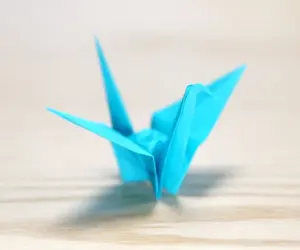

An origami kite base is a preparatory fold made from a square sheet by bringing two adjacent edges toward a diagonal or central axis, producing a narrow kite-shaped form. The fold concentrates layers and creates long pointed sections that designers can develop into heads, wings, petals, tails, or modular connection points. Key Facts at a Glance What Is an Origami Kite Base? An origami kite base is a folded square whose outline resembles a diamond-shaped flying kite, with two side flaps converging toward a long axis. The base is a construction stage rather than a finished model, and later folds…
Author: Orig Ami
A book fold divides origami paper into two equal sections with one central crease, while a cupboard fold, also called a gate fold, brings both outer edges to the center and creates four equal sections when unfolded. Choose the book fold for a simple centerline or symmetry; choose the cupboard fold for quarter divisions, doors, and box structures. Key Facts at a Glance What Is a Book Fold? A book fold is an edge-to-edge fold that places one raw edge directly over the opposite raw edge. The resulting crease lies halfway across the sheet, so an unfolded square has two…
A crease pattern is an unfolded origami blueprint that maps the creases, reference geometry, flaps, and layers needed to form a finished model. To fold from one, identify its line conventions and grid, transfer every crease accurately, then collapse connected regions together before shaping the resulting base into the subject. Key Facts at a Glance A crease pattern, or CP, shows an origami model completely unfolded on one sheet. Mountain folds bend toward the ridge; valley folds bend toward the trough. A CP does not usually provide a complete shaping sequence or finished-layer instructions. Box pleating commonly uses square grids…
When stuck on an origami step, stop forcing the paper and diagnose the last confirmed shape. Check the previous diagram, count visible layers, verify model orientation, identify the arrow’s action, and locally unfold the model if needed. Most failures come from an earlier crease, a hidden flap, or a valley and mountain fold being reversed. Key Facts at a Glance An origami diagram communicates paper movement through symbols, line types, arrows, shading, and sequential views. The safest recovery point is the last step whose edges, colors, layers, and creases all match the illustration. Paper resistance usually indicates a geometric error,…
Origami difficulty levels describe how much geometric reasoning, precision, layer management, shaping, paper control, and diagram literacy a model requires. The commonly used progression runs from simple, traditional beginner, intermediate, high-intermediate, complex, to super-complex, but these labels are community conventions rather than a single globally enforced standard. Key Facts at a Glance What Do Origami Difficulty Levels Measure? Origami difficulty measures the combined demands of a model, not simply the number of diagram steps. A 25-step traditional crane can be easier than a 12-step model containing a difficult sink, because the second model may require more accurate geometry and more…
In origami, “fold and unfold” means bending the paper along a specified line, sharpening the crease, and opening the paper again. The remaining crease, called a pre-crease, becomes a guide, hinge, alignment mark, or structural boundary for later folds. It does not usually mean completing and undoing the entire model. Key Facts at a Glance What Does Fold and Unfold Mean in Origami? “Fold and unfold” is an instruction to make one crease and then return the paper to its previous flat or partially flat position. Origami designers use the action to transfer a location, distance, diagonal, or centerline onto…
In origami, “repeat behind” means perform the same fold on the corresponding flap or layer on the reverse side of the model. Usually, you turn the paper over, identify the matching location, and recreate the fold with the same geometric relationship, such as folding an edge to a center crease. The phrase does not always mean copying the visible left-right direction. Key Facts at a Glance What Does “Repeat Behind” Mean in Origami? “Repeat behind” is an origami diagram instruction that tells you to duplicate a specified fold on the hidden or reverse side of the paper. The repeated action…
The most common beginner mistakes when following origami instructions are misreading fold symbols, skipping orientation changes, using inaccurate reference points, creasing weakly, and continuing after an early error. Origami rewards sequence control: a small mistake near the beginning can distort later layers, so prevention and early diagnosis matter more than force. Key Facts at a Glance What Do Origami Instructions Actually Show? Origami instructions show a sequence of paper states, fold actions, arrows, and reference relationships. The learner must distinguish what already exists from what must happen next, because a diagram often omits intermediate motion and displays only the finished…
Origami video is usually better for beginners, children, and folds involving movement, while an origami diagram is usually better for experienced folders, complex models, and self-paced practice. The best choice depends on whether the priority is copying hand motion, understanding geometry, correcting orientation, or completing a particular model efficiently. Key Facts at a Glance What Each Medium Actually Teaches Origami videos teach procedural movement by showing a model changing over time. Origami diagrams teach symbolic geometry by showing how a flat sheet should look before and after a fold. The distinction matters because successfully copying one crane is different from…
The essential origami tools for beginners are square origami paper, a clean folding surface, and accurate instructions; most people can begin without a bone folder, cutting mat, or specialty blade. A 15 x 15 cm pack of kami usually provides the best starting material, while a ruler, scissors, and crease tool become useful when a project requires custom sizes or many layered folds. Essential Tools at a Glance What Are the Essential Origami Tools for Beginners? Square paper is the only physical material required for most beginner origami models. Beginners also benefit from a hard, uncluttered work surface and instructions…