
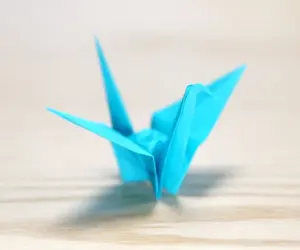
The most famous origami artists include Akira Yoshizawa, Robert J. Lang, Satoshi Kamiya, Tomoko Fuse, Eric Joisel, Sipho Mabona, Hoang…
Browsing: Blog
The math behind origami is the geometry of transforming a flat sheet into a three-dimensional shape while preserving distances within…
Origami is used in science and engineering to transform flat materials into compact, deployable, movable, or load-bearing three-dimensional structures. Researchers…
The benefits of origami for your brain come mainly from combining visual-spatial reasoning, sequential planning, fine-motor control, tactile feedback, and…
Origami as therapy and mindfulness is a structured paper-folding practice that uses touch, visual attention, breathing, and sequential movement to…
Kids can start exploring origami at about age 2 with crumpling, flattening, and assisted half-folds, while independent simple origami usually…
Arthritis-friendly origami for seniors adapts paper size, folding pressure, workspace setup, tools, and project complexity for painful or stiff hands.…
The central origami rule is that pure origami uses folding alone, without cutting, tearing, gluing, or adding material. A model…
Origami is hard for beginners because a flat sheet must be converted into a precise three-dimensional structure while the folder…
Learning origami takes about 1-2 weeks for basic models, 1-3 months for intermediate designs, and 6-24 months for advanced folding…